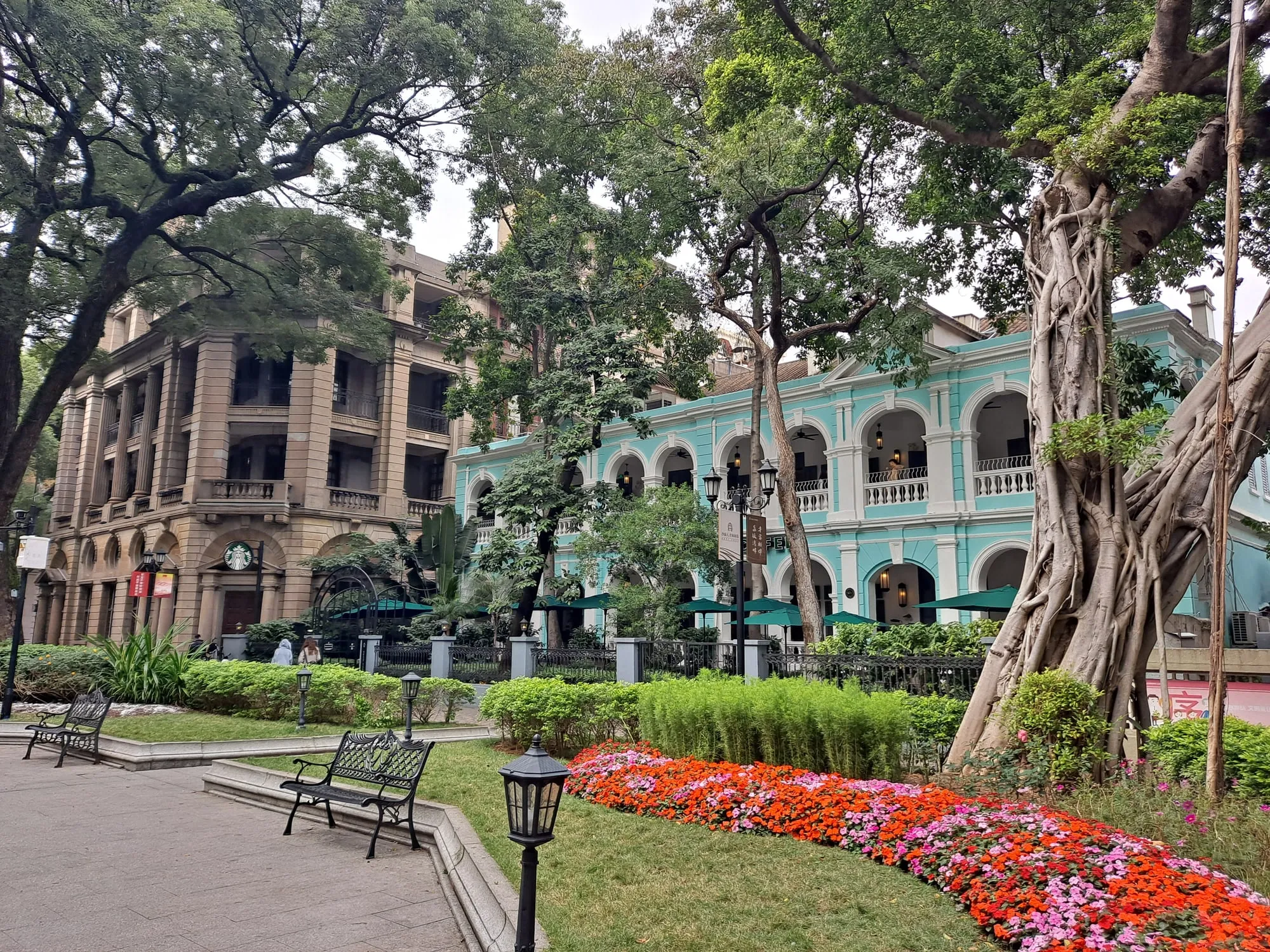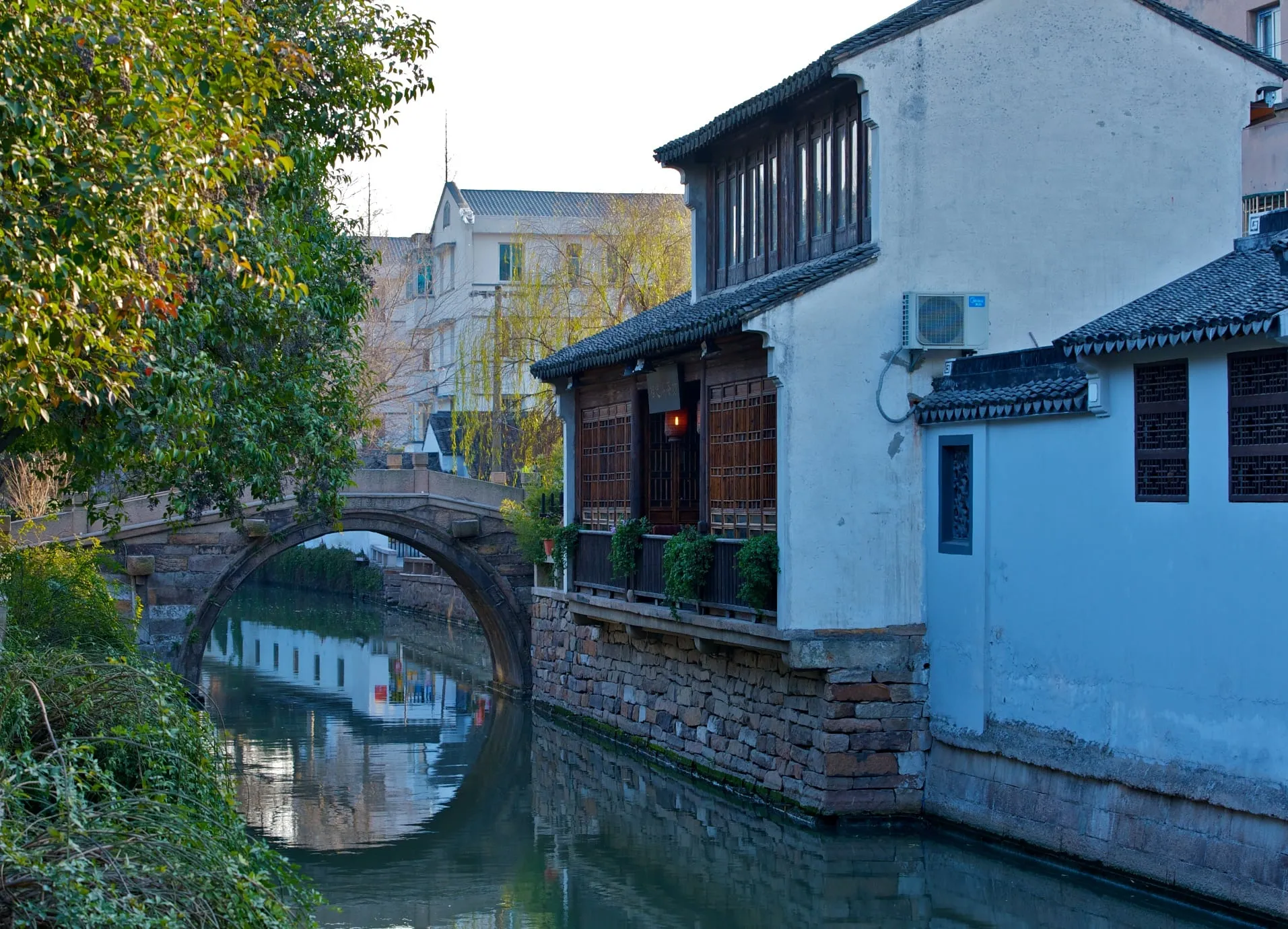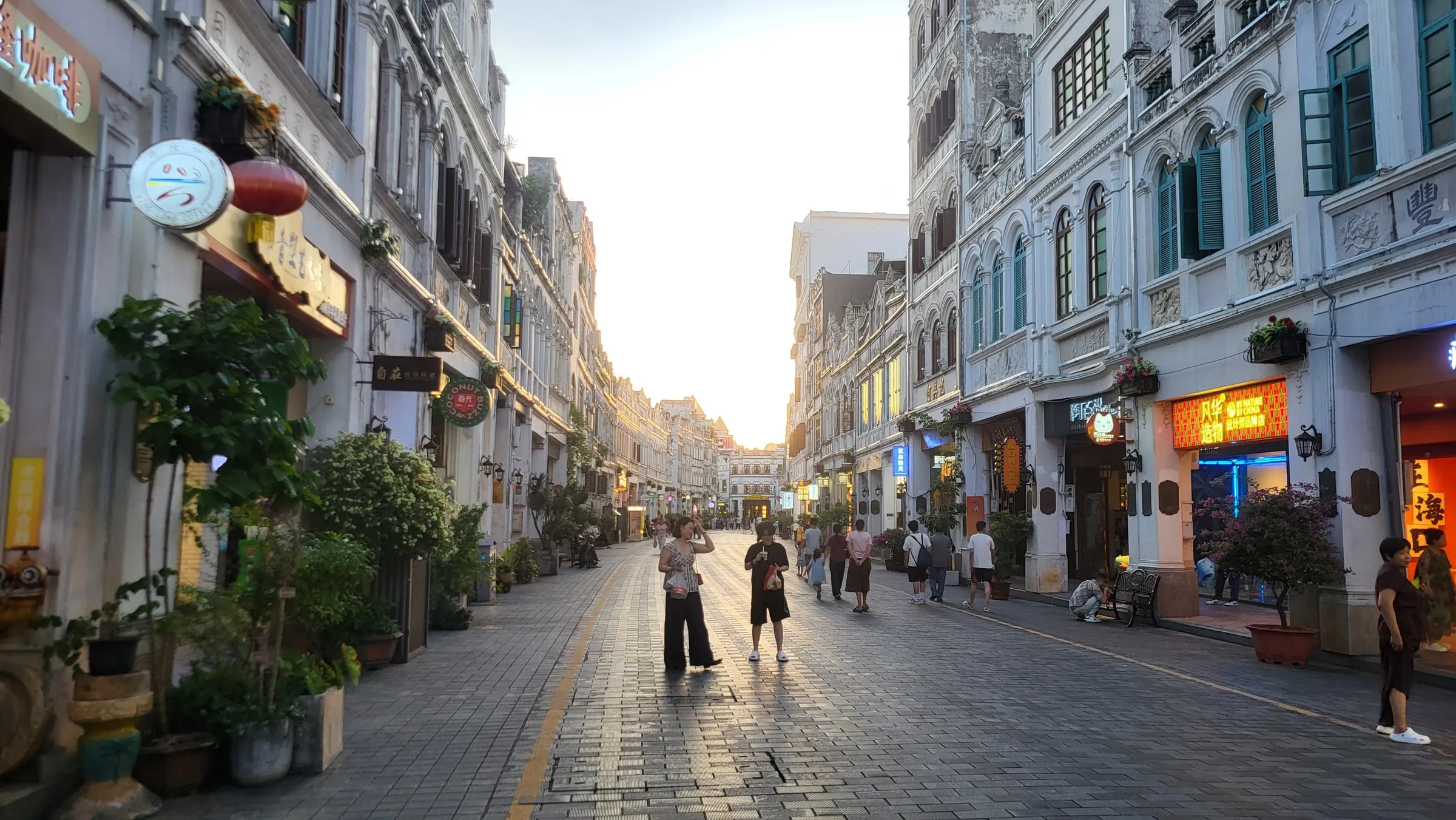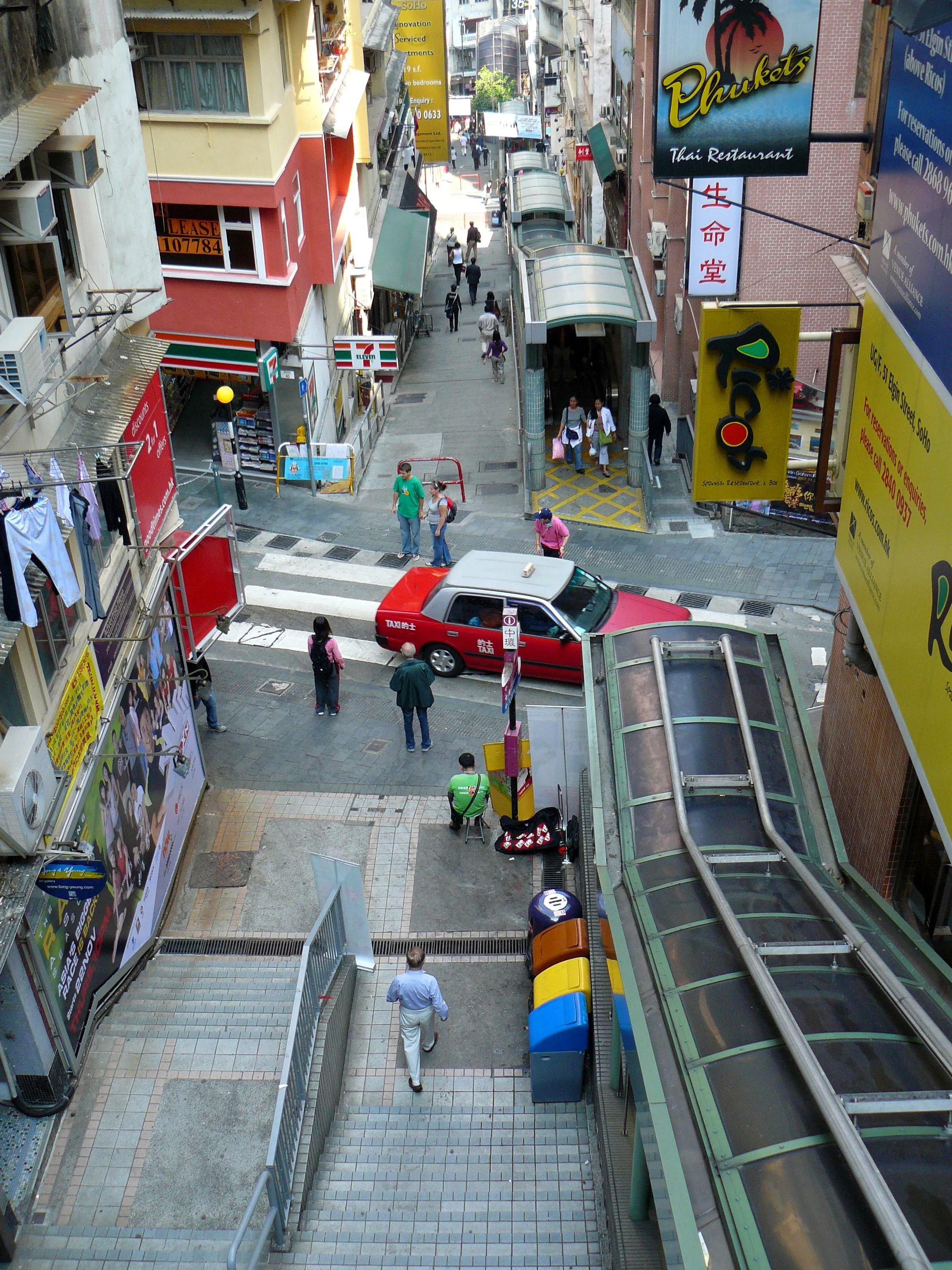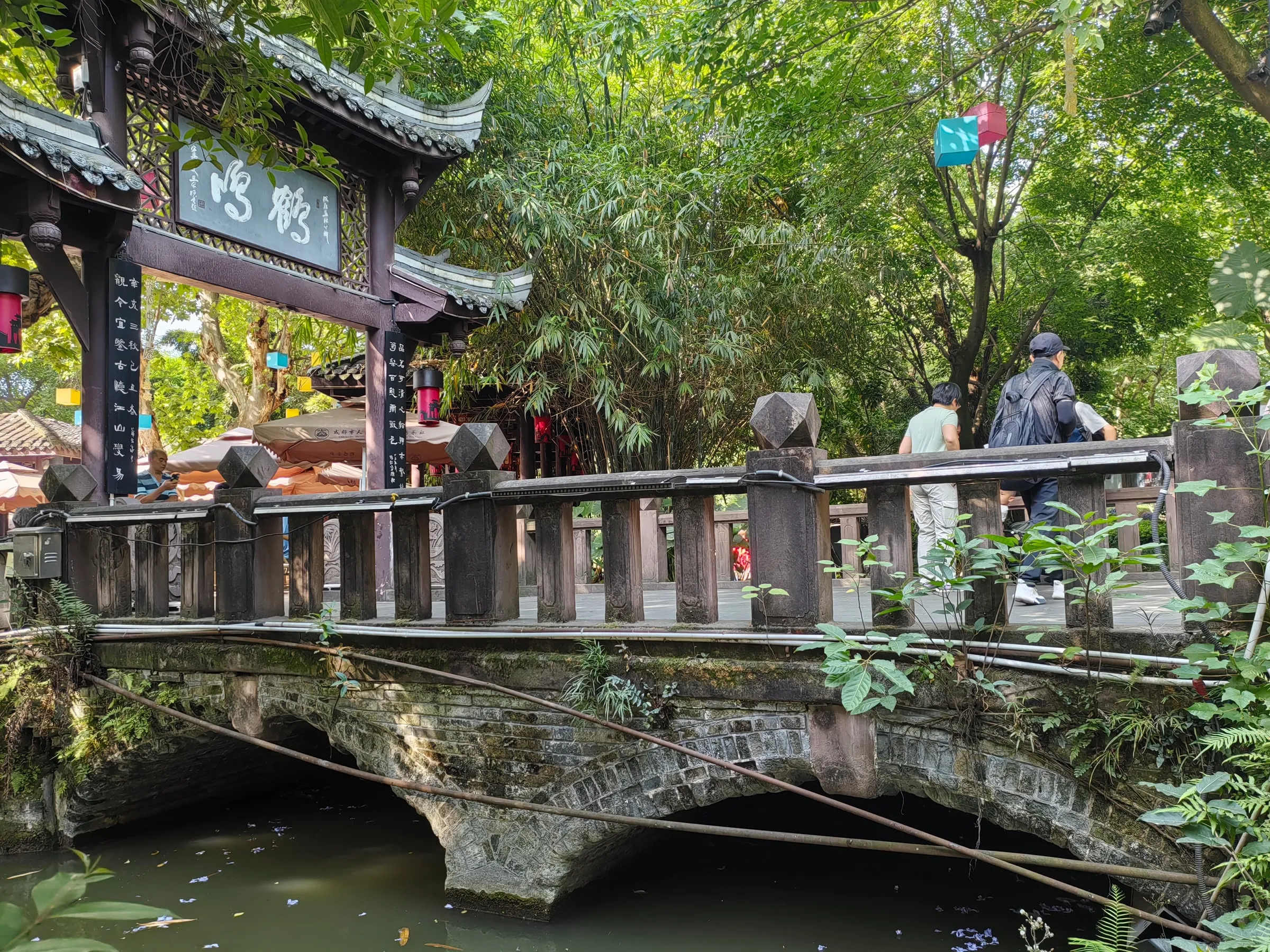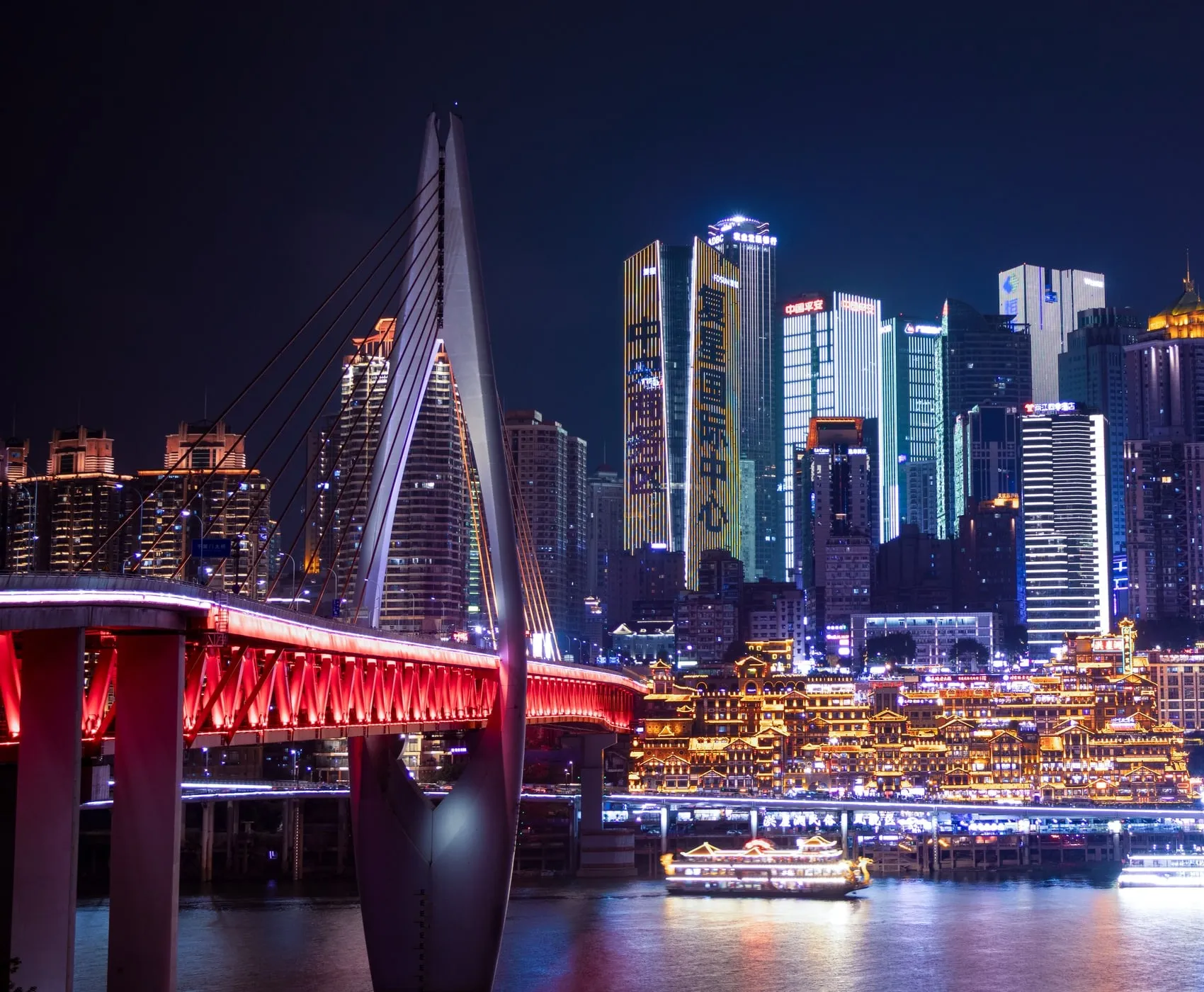
A river gives you a horizon. A staircase takes it away. In Chongqing, moving between the two is a useful way to understand the city: a stretch of water and towers, a close view of a doorway, then the water again through a gap in the buildings.
Rather than collecting viewpoints, give the day three scales: the riverbank, the hillside lane and the view from above. The aim is to notice how they fit together. This is a suggested way of exploring, assembled from published place information, not an account of a personal walk. The photographs show different places and dates; they do not document one continuous itinerary.
First, give the city a river
Start somewhere you can pause safely beside a public riverfront route. Look across before looking up. A skyline photograph compresses the city into a single wall; from the water’s edge, the spaces between buildings and bridges become part of the picture.
The cover shows the Jialing River side, with Qiansimen Bridge and Hongya Cave. The daylight photograph below looks across the Yangtze towards Raffles City. They are different river views, not two images of the same stop. Choose one bank for an unhurried first outing rather than promising yourself both before lunch.
Photograph the wider scene before moving closer. Leave a strip of water in the frame and look for the point where the buildings meet the bank. That relationship is more revealing than filling every photograph with towers. If riverside access is restricted or the weather is unpleasant, use an open public street-level viewpoint instead; don’t follow people past barriers to get lower.
Then trade distance for steps
Shancheng Alley (山城巷) offers a smaller scale. The city’s international information site describes an uphill walking route associated with Zhongxing Road and the Tongyuanmen area, with views towards the Yangtze. Use that description to understand the terrain, not as a live guarantee that every entrance or section is open.
On arrival, check the posted map and choose a manageable section. In a hilly city, a nearby pin can still involve a substantial climb. Before setting off, identify both the entrance you are using and the street from which you plan to leave. If stairs are difficult for you, this part needs an alternative rather than optimistic timing: use accessible street-level viewpoints and verify any lift arrangements locally.
Here the useful things to look at are close: the depth of a threshold, a handrail that turns with the path, the way a shop occupies the small patch of level ground outside its door. These details explain the hillside without requiring a superlative about the city’s steepness.
Stop out of the flow of people. The route may be a visitor attraction, but a doorway can still be someone’s entrance and a narrow landing is not a private photographic set. Ask before taking a close portrait, and let people pass before stepping back to frame a building.
Four ways to see the hillside
The first two photographs show Shancheng Alley at walking scale. The third shows the layered buildings of Hongya Cave, a different destination; the fourth is an older view of Caiyuanba Bridge from Eling Park. Together they show how close details and distant views explain different parts of the city. They are not consecutive stops or a record of present-day access.
Finish with a view, not another checklist
Once you have walked a section of the hillside, a higher view means more. You can look for the bank you started from and the routes that connect it to the buildings above. Choose an open viewpoint along your actual route; there is no need to make a paid observation deck compulsory.
Sit down before deciding what comes next. If your legs are tired, the city has already supplied the point of the walk. A meal and a comfortable journey back are a better ending than another staircase undertaken solely because it was on a list.
If you return to the river after dark, treat that as a separate outing. The cover is a photograph of a particular evening, not a promise about tonight’s lighting, crowds or weather. Recheck your return journey and use public, open approaches. A dramatic image is not a reason to cross a closed access point.
Plan around the climb
- Use three loose blocks: one river view, one hillside section and one place to stop and look back. Break them across two days if that suits your energy.
- Check the level as well as the address. Confirm an entrance on a current map; a taxi pickup point must be on a road a car can reach.
- Leave transport flexible. This guide does not depend on a particular ferry, cable car or train departure. Check the relevant operator before adding one.
- Keep a weather alternative. Wet steps, heat and poor visibility change the value of a long walk. Shortening the route is part of the plan.
- For step-free access, verify the complete route. The pictured stairs and passages have not been audited for wheelchair access.
The most useful souvenir may be a better sense of the city’s shape. At the river, it is broad. In the lane, it becomes intimate. From above, the two begin to connect.
Sources
Place information checked on 1 November 2026: Shancheng Alley, iChongqing. Its description supplies geographical context; it includes older exhibition information and is not treated here as a current access notice. No admission price, opening hour or service timetable is asserted in this guide. Route choices and pacing are editorial suggestions.
Image credits
- Cover: Maple Doctor · Wikimedia Commons · CC BY-SA 4.0.
- Yangtze skyline: Junyi Lou · Wikimedia Commons · CC BY-SA 4.0.
- Shancheng steps: HoweyYuan · Wikimedia Commons · CC BY-SA 4.0.
- Shancheng walkway: 🌈 · Wikimedia Commons · CC BY-SA 4.0.
- Hongya Cave: xiquinhosilva · Wikimedia Commons · CC BY 2.0.
- Eling Park view: George Wenn · Wikimedia Commons · CC BY-SA 3.0.
Photos resized and compressed; the cover is also cropped. CC BY-SA adaptations retain their original licences.