Staying overnight in Pingyao changes the shape of a visit. It gives you permission to stop walking before you have seen everything, to return to a street in different light and to begin the next morning without arriving from somewhere else. It does not turn the old city into an empty stage.
Pingyao (平遥), in Shanxi, is a place to look at streets and buildings together. UNESCO identifies its town plan, homes, shops and historic banking buildings as parts of the same surviving urban fabric. An overnight stay can make that relationship easier to see, provided the room helps you rest rather than adding another destination to the checklist.
Choose the room by the route to its door
Before comparing courtyard photographs, find the property’s exact entrance. Ask where a vehicle can legally stop, how far luggage must be carried and whether there are steps between reception and your room. “Inside the old city” is a location category, not a complete arrival plan.
Then ask about the room itself: private bathroom, heating or cooling for your dates, windows, nearby evening activity and breakfast arrangements. A photogenic courtyard tells you little about sound travelling between rooms. Request the actual room type you are booking, rather than relying on an image of the most attractive suite.
Have the address saved in Chinese and confirm passport check-in before arrival. These are practical questions for the operator, not reasons to assume a historic building will be uncomfortable or that every courtyard stay is equivalent.
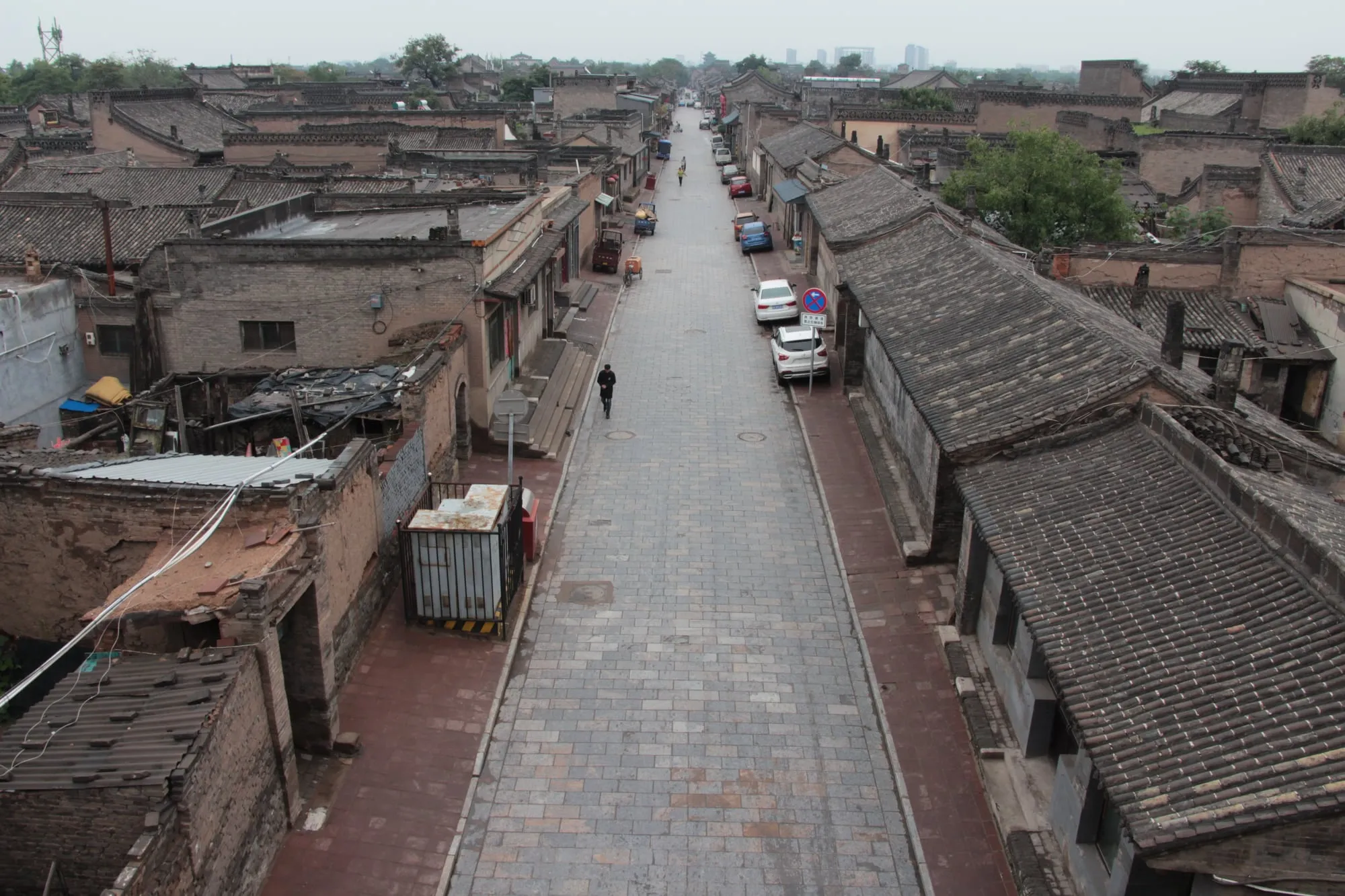
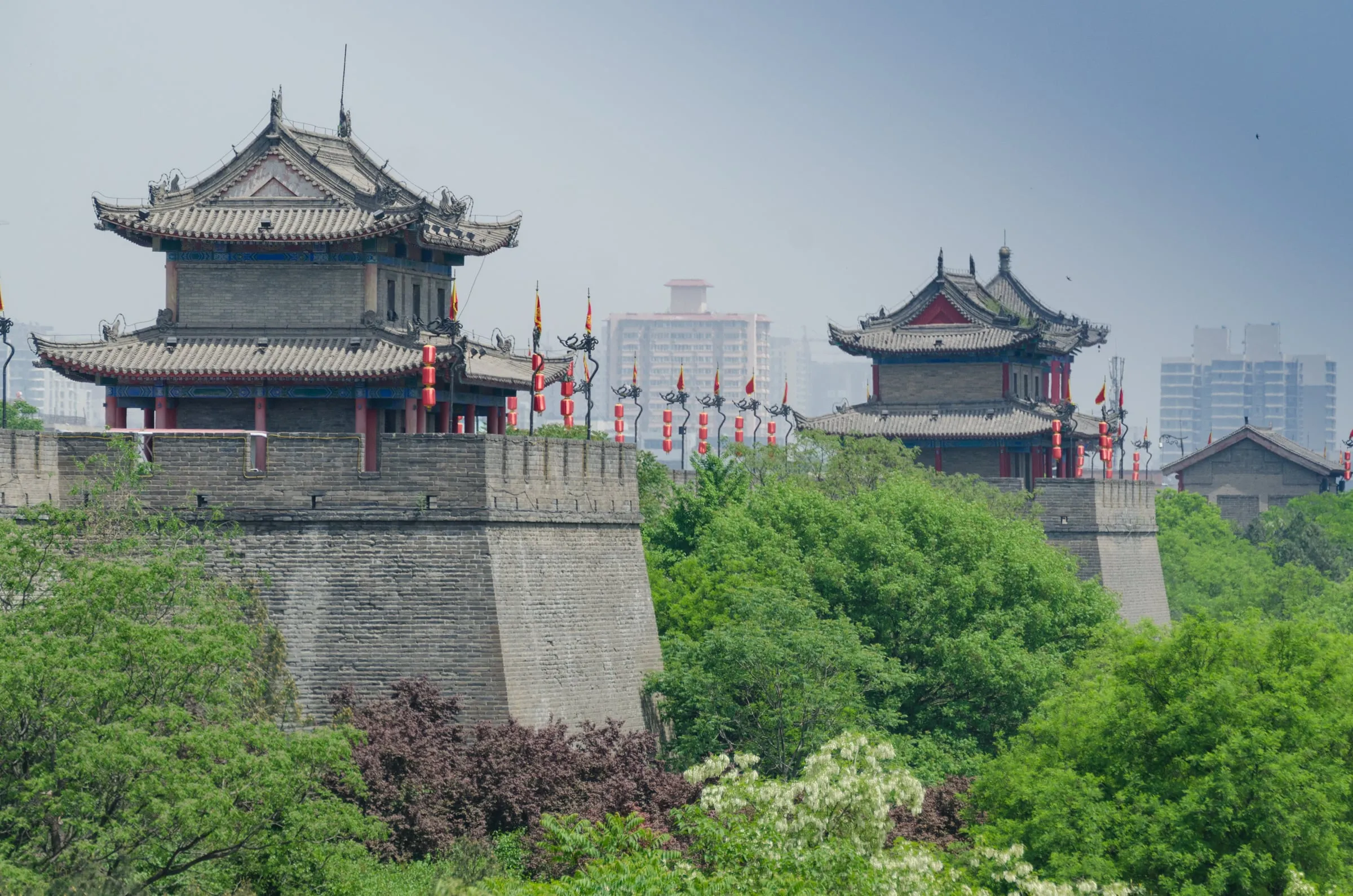
Pingyao’s streets and rooftops from the city wall, photographed in 2017. ThomasMomas · Wikimedia Commons · CC BY-SA 4.0. Resized and compressed.
Let evening be a second look
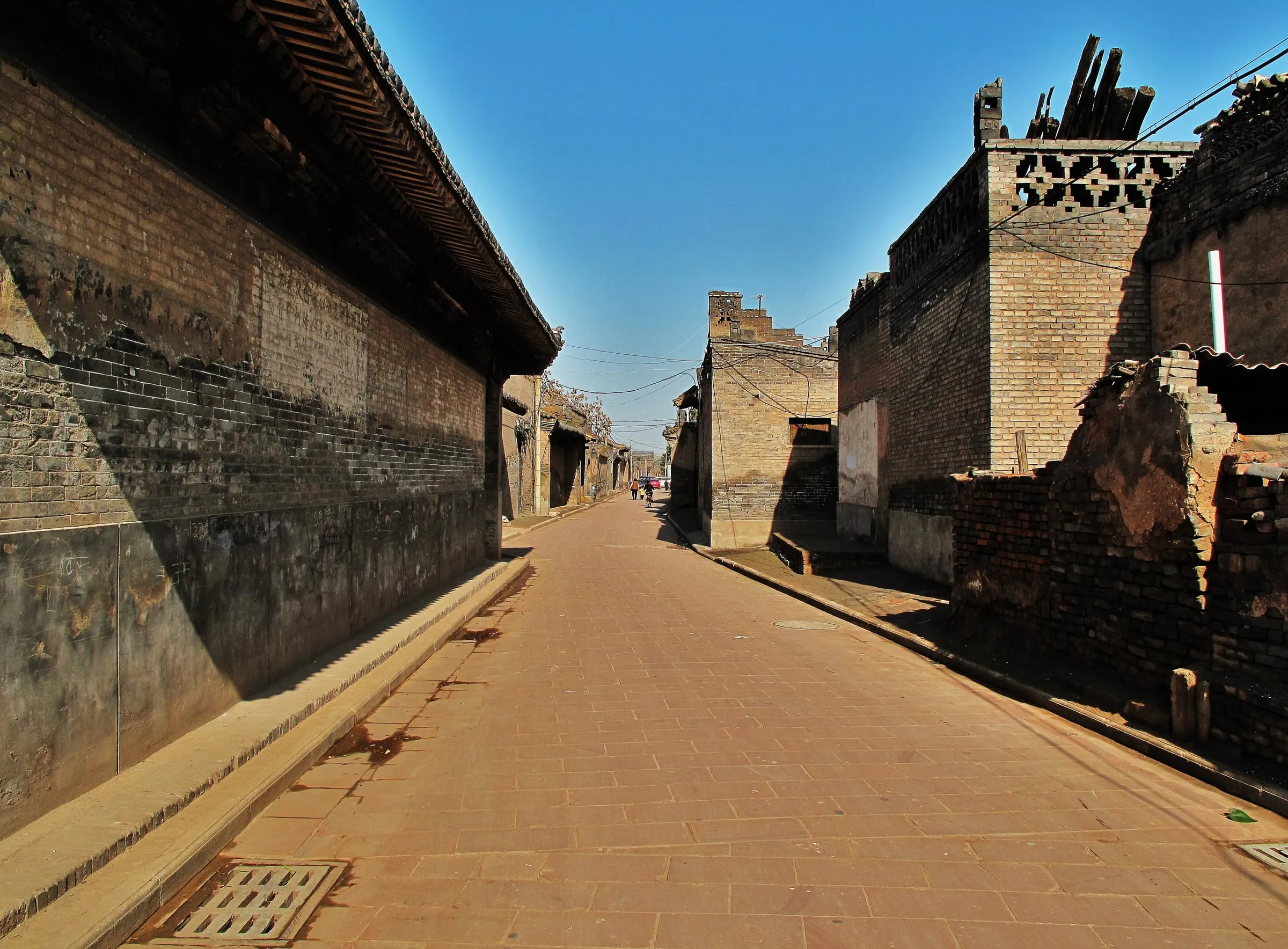
Revisit a street you saw during the day. Shopfronts, rooflines and thresholds are easier to compare when you are no longer navigating an unfamiliar route. Keep the walk short enough that dinner and the return to your room remain straightforward.
Public streets, ticketed historic interiors and the city wall are different kinds of space. Do not infer opening hours from a lit entrance or assume daytime admission permits evening entry. Use the current official notice for the places you actually intend to enter.
Evening light is not a promise of silence. Shops may remain busy, visitors may still be arriving and a residential doorway remains private. Photograph the street from a public position; do not step into a courtyard simply because its gate is open.
A morning with one purpose
Choose one building whose use interests you. Pingyao’s banking history offers a way to read the old city beyond its appearance: look for how a commercial building separates the street, working spaces and domestic areas. Let the site’s interpretation explain the specific building rather than treating every large house as a bank.
A second morning also gives you a useful choice. You can revisit something you missed, or leave with enough time for the onward journey. Avoid making an outside excursion compulsory on departure day just because it appears close on a regional map.
Stay overnight if the additional time is worth the room and luggage arrangements. Make a day visit if your schedule or comfort needs favour a simpler base elsewhere. Neither choice needs to prove that you have found a more authentic Pingyao.
Planning sources
Ancient City of Ping Yao, UNESCO supplies the heritage context. China’s official accommodation guidance covers identification at hotel check-in. Checked 1 November 2026; individual properties and attraction opening arrangements require date-specific confirmation.
Image credits
- Cover: Francisco Anzola · Wikimedia Commons · CC BY 2.0. Resized and compressed.
CC BY-SA image adaptations retain the linked licence.