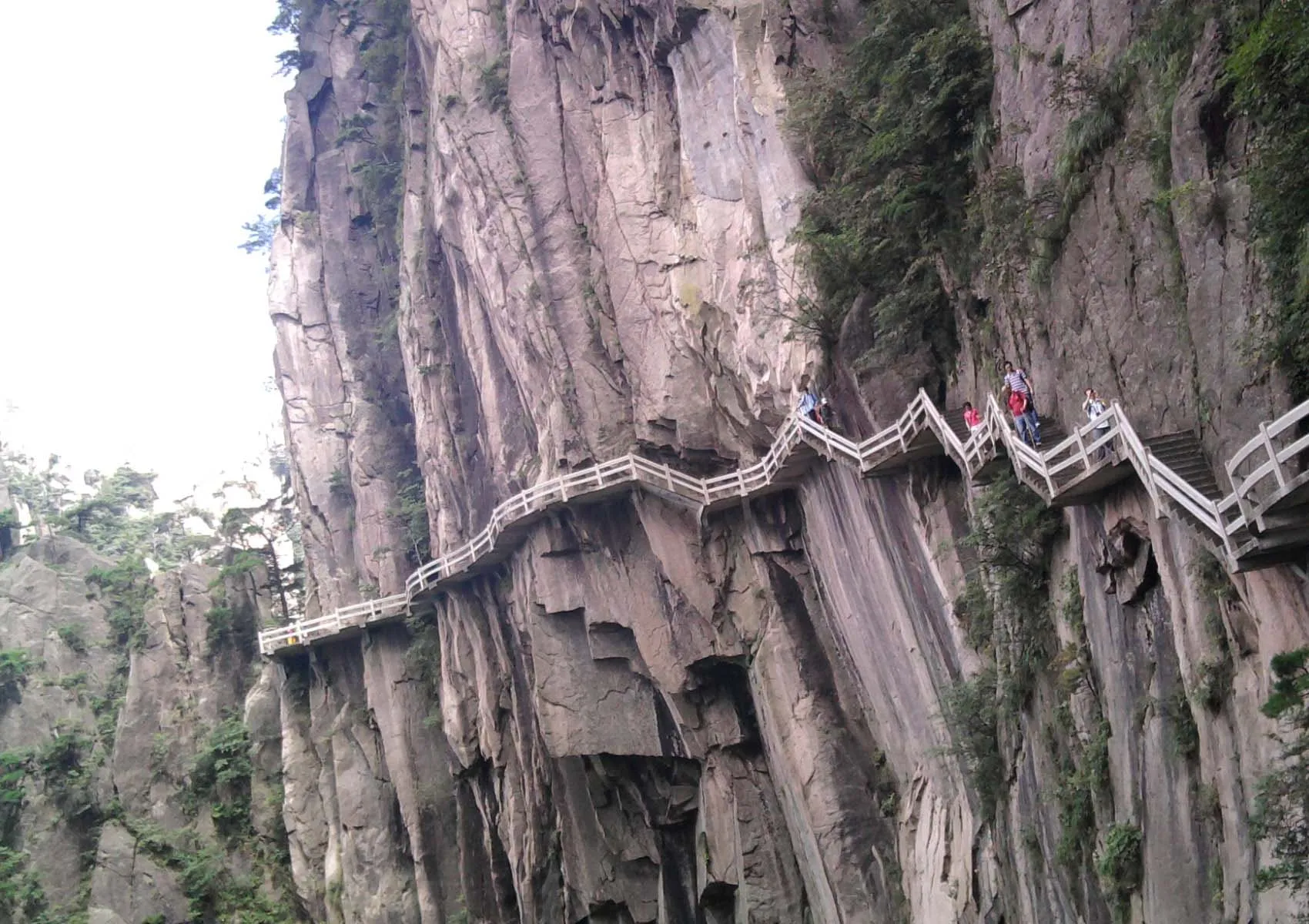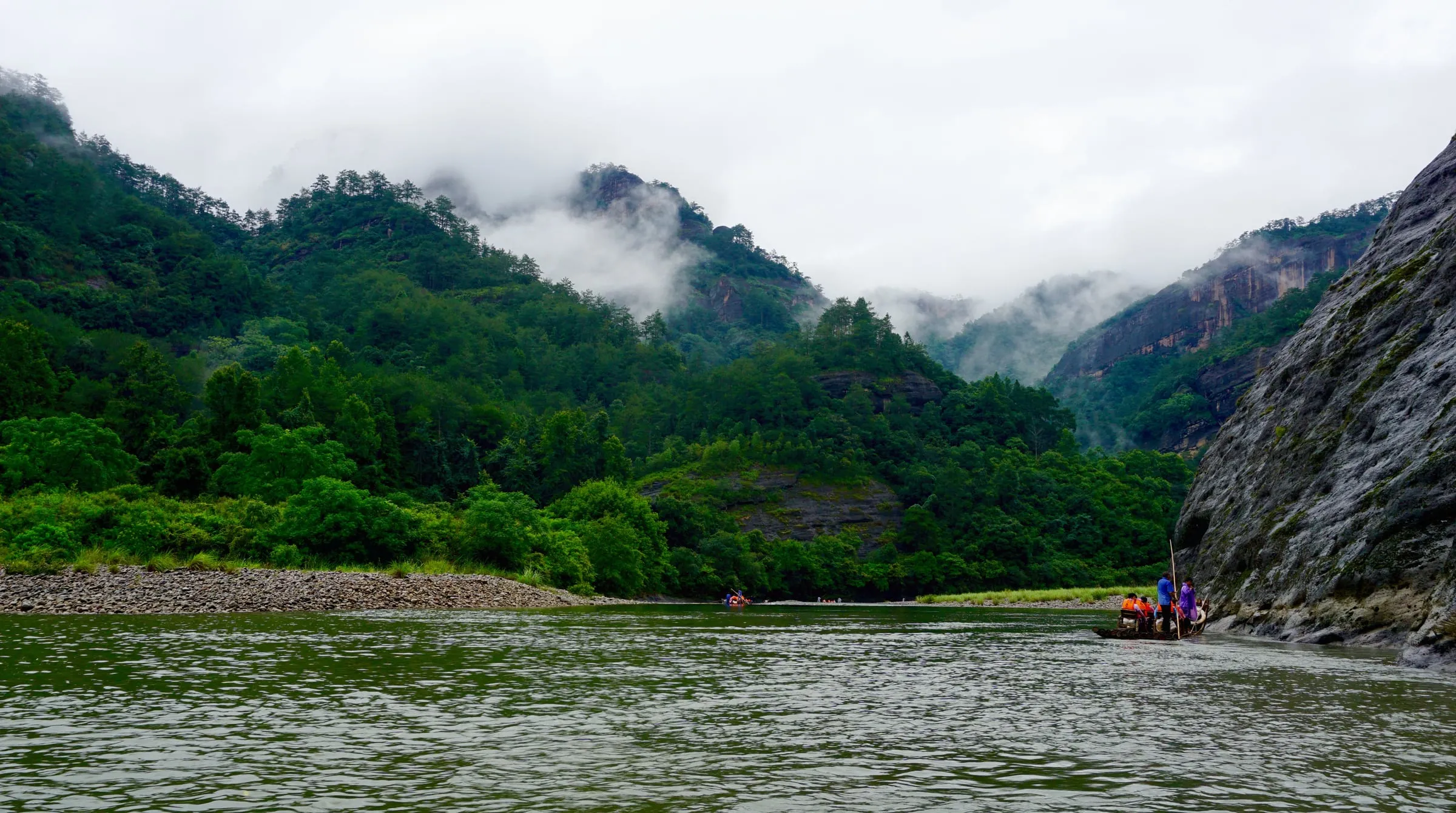
In Wuyishan, the view and the way you reach it are separate decisions. A river scene can remain beautiful under cloud while a steep climb loses much of its appeal. Planning with that distinction gives you more freedom than assigning every hour to a named summit.
The Nine-Bend River (九曲溪) and the surrounding rock formations give the visitor landscape a clear centre. UNESCO describes Wuyi as both a natural and cultural heritage property. That broad designation is not a visitor pass to every mountain or forest within it: this guide concerns managed visitor areas and activities confirmed open for your dates.
Keep three kinds of day available
For a clear day with suitable conditions, consider one established uphill walking route. Choose it from the scenic area’s current map, check the return route and leave enough time to descend without hurrying. Judge the decision by the people walking, not by a dramatic photograph taken from the top.
For cloud with manageable conditions, a lower-level walk can put rock faces, water and vegetation closer to you. Ask staff which routes are open and how much stair climbing they involve. “Lower” does not automatically mean flat or accessible.
For heavy rain, a closure notice or an uncomfortable forecast, keep a day that does not depend on the mountain. A meal, a rest and time in an open town or cultural space are legitimate uses of a visit. Do not replace a closed official route with an unmarked path found online.
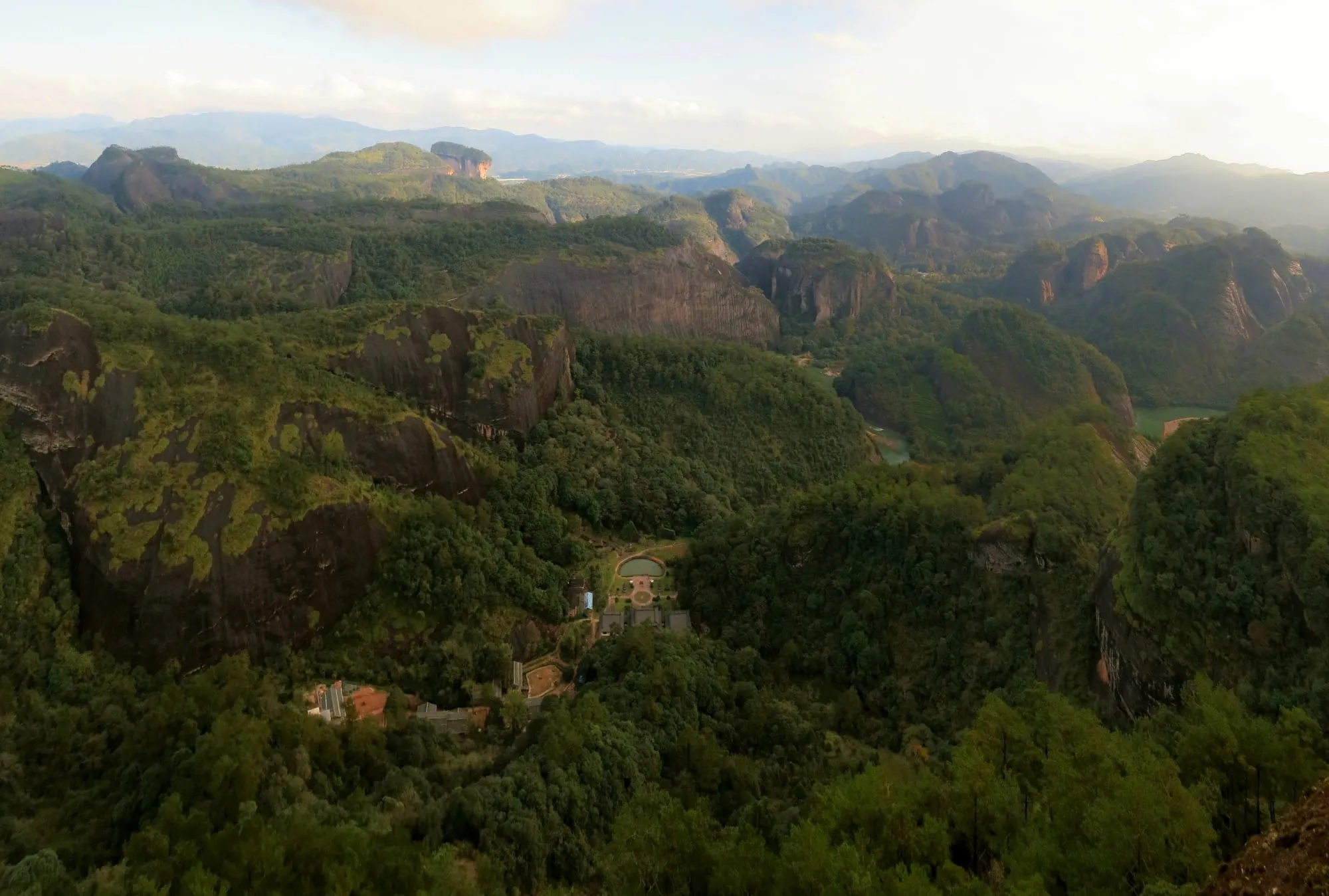
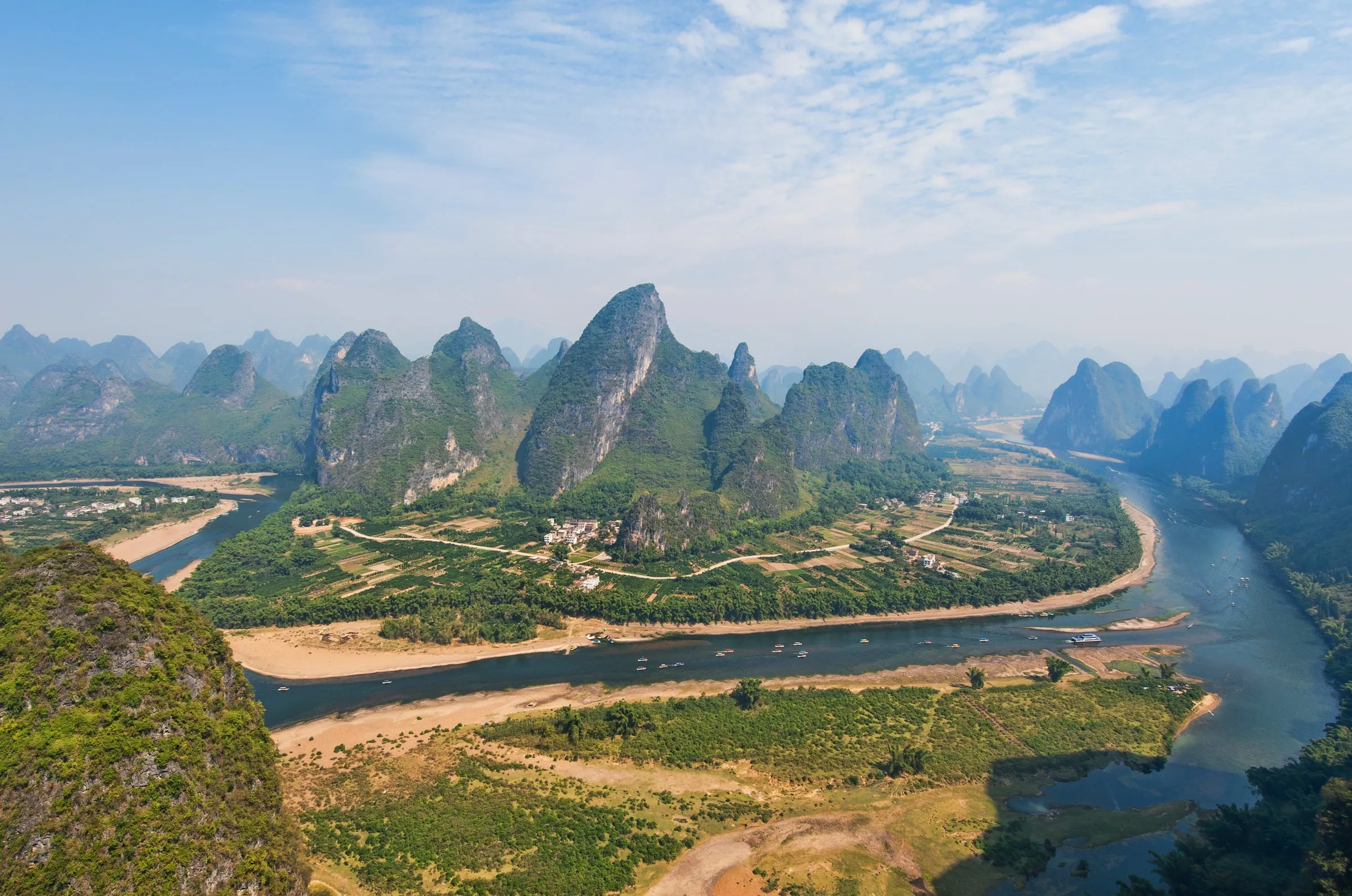
Wuyishan seen from Tianhu Peak, photographed in November 2015. The image does not establish current access to this viewpoint. rheins · Wikimedia Commons · CC BY 3.0. Resized and compressed.
Treat the raft as a separate booking
If a Nine-Bend River raft trip is important to you, confirm the actual product: boarding point, appointment, return transport, restrictions and what happens if the operator cancels. Do this before building the rest of the day around it.
A landscape photograph cannot establish today’s water conditions. Nor does buying admission necessarily settle every transport or activity charge. Read the inclusions on the official booking page and keep the confirmation accessible.
Do not schedule the hardest walk immediately after a river activity simply because both appear in a one-day package. Transfers, queues, meals and time to dry or change can matter as much as the attractions themselves.
Leave space for the smaller landscape
After the broad view, look at something close. Notice the meeting of a path and a rock face, the way a bend hides the next section of water or a planting pattern seen from a public route. These observations still work when distant peaks disappear into cloud.
For tea-related visits, distinguish a public shop from a working production space. Ask before entering or photographing a process, and clarify any tasting price before sitting down. A friendly sales conversation is not an independent assessment of a tea’s origin or quality.
Before leaving your accommodation: check the operator’s notice, choose one main activity, identify the return connection and carry what the forecast requires. Preserve the option to shorten the day. That flexibility is the useful part of a weather plan.
Planning sources
Mount Wuyi, UNESCO · Wuyishan scenic area. Checked 1 November 2026 for heritage context and the operator’s information channel. No fixed raft schedule, price or all-weather access is promised.
Image credits
- Cover: John Lian · Wikimedia Commons · CC BY-SA 4.0. Cropped, resized and compressed.
CC BY-SA image adaptations retain the linked licence.