The most important space in a Hexi Corridor itinerary is the space between its attractions. A map can make Lanzhou, Zhangye, Jiayuguan and Dunhuang look like a sequence of pins to collect. On the ground, each change of base asks for packing, driving, food, parking and enough attention to arrive well.
Use those four places as a planning framework, not an instruction to complete the corridor in a fixed number of days. This is a route concept for building a trip with confirmed roads and bookings, not a live road-condition report.
Reserve the difficult appointment first
If the Mogao Caves (莫高窟) are central to the journey, begin with the Dunhuang Academy’s official booking information. Check the visit product, date, identification requirements and arrival instructions before attaching a long drive to it.
The Academy identifies its official reservation channels and warns against unauthorised ticket sales. It also explains that severe weather can interrupt visits. A cave appointment deserves a comfortable arrival margin and a contingency, rather than being treated as an optional stop squeezed in after the road.
Work backwards from that fixed point. Decide where to sleep the night before, then whether the previous driving day still makes sense. You may find that dropping one stop improves the places you keep.
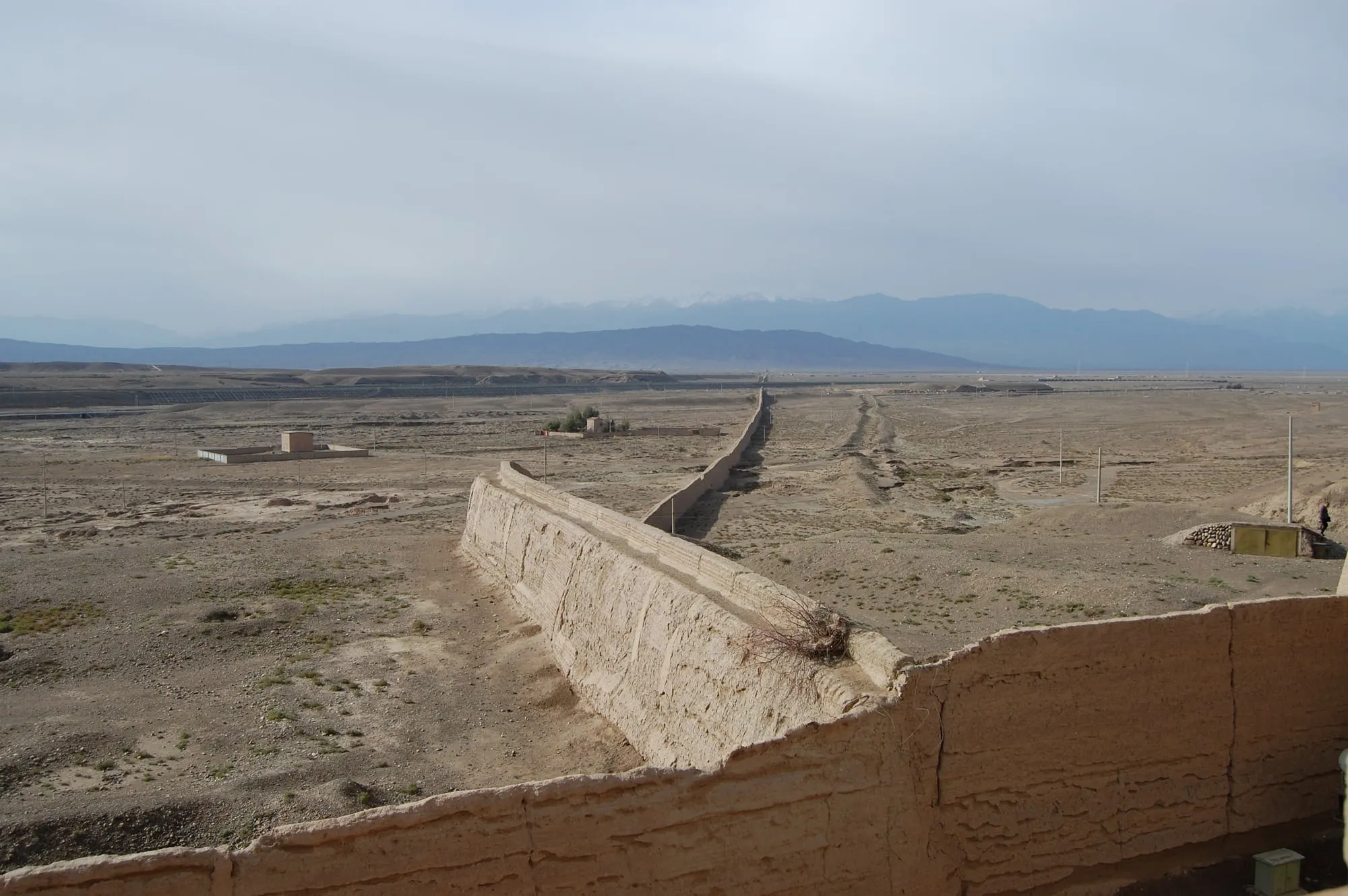
Fortifications at Jiayuguan, photographed in 2009. Sigismund von Dobschütz · Wikimedia Commons · CC BY-SA 3.0. Resized and compressed.
Give each base a different job
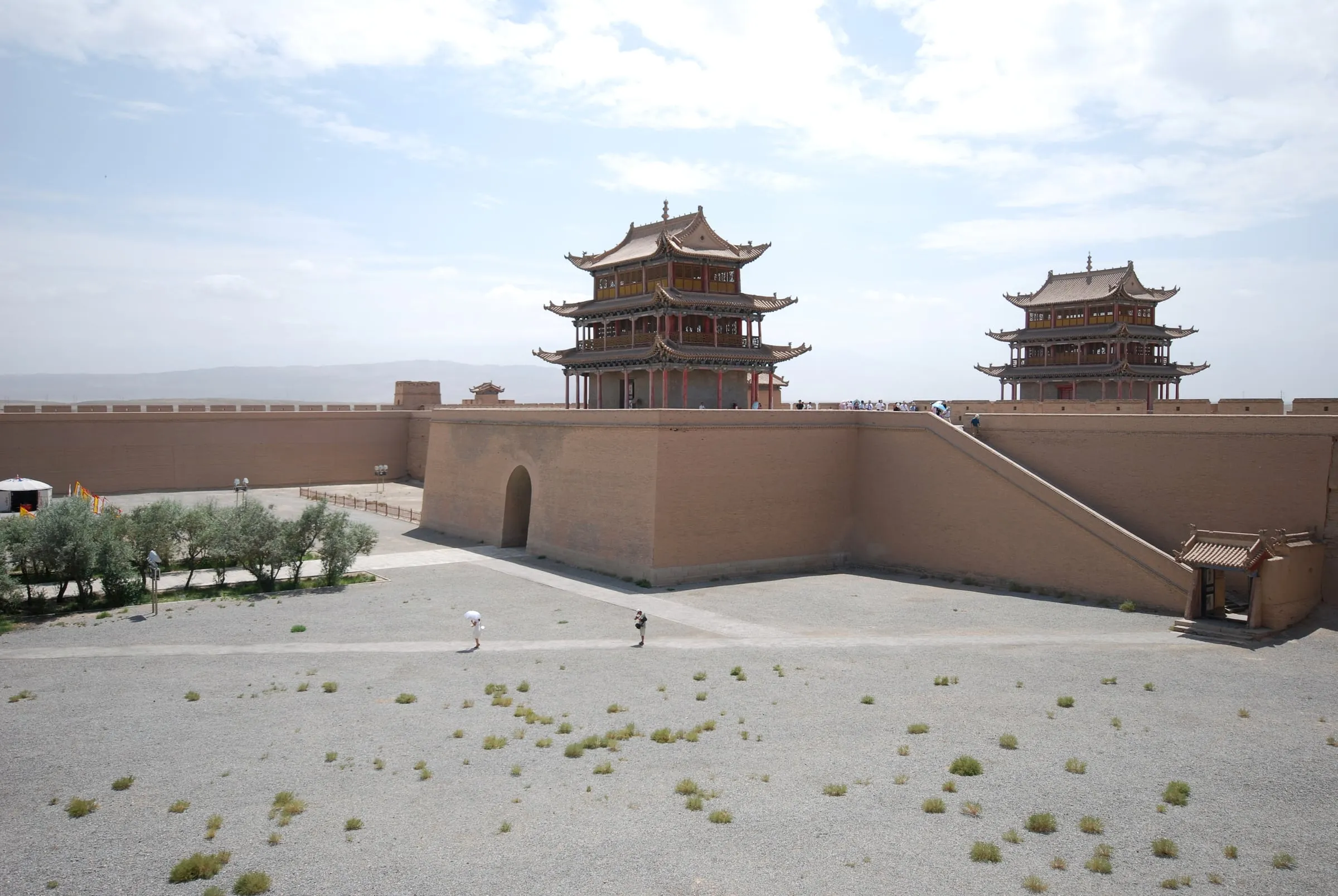
Use Lanzhou to organise the journey and recover from arrival. In the Zhangye area, choose the particular landscape or cultural visit that interests you before selecting a room. Let Jiayuguan offer a change of scale through its fortifications rather than another rushed roadside photograph. At Dunhuang, separate a booked heritage visit from any other excursion.
These are editorial roles for the stops, not a list of mandatory admissions. Choose fewer bases if changing accommodation would consume too much of the trip. A night with no scheduled attraction can be the most useful buffer you have.
For each driving section, obtain a current route estimate and then add stops separately. Keep meal, fuel or charging arrangements explicit, especially before leaving a larger town. Do not depend on an appealing roadside photograph as evidence of a legal place to stop.
Decide who is driving
International visitors should settle driving eligibility and rental requirements before committing to a car. China has a provisional-permit process; an overseas licence or international permit should not be assumed sufficient on its own. Confirm the current requirements with the relevant traffic authority and rental company.
If self-driving is not suitable, compare an appropriately licensed car-and-driver service with rail connections and local transfers. Ask for a written itinerary showing the vehicle, driver arrangements, included distance, waiting time and cancellation conditions. Avoid paying for a “private tour” whose transport details remain unclear.
Make room for a shorter day
Wind, poor visibility, fatigue or a changed opening notice can make the original plan less attractive. Keep the next accommodation’s contact details accessible and decide which stop can be dropped without jeopardising a reservation.
The route’s interest does not depend on continuously moving west. Spending longer in one town gives the road journey a human scale: time for a meal, a walk and a morning when departure is not the first task.
Planning sources
Dunhuang Academy: official ticket channels · Mogao visitor information · Shanghai’s official explanation of provisional driving permits. Checked 1 November 2026. The permit source explains the process; confirm the procedures applicable to your collection location.
Image credits
- Cover: Kevin Hale · Wikimedia Commons · CC BY-SA 2.0. Resized and compressed.
CC BY-SA image adaptations retain the linked licence.