A road journey through southern Anhui should give the villages room to be more than stops. If every morning begins with packing and every afternoon ends with another check-in, the landscape becomes something seen mostly between windscreen pillars.
Use the Huangshan–Yixian area as a starting framework and select a few bases that fit your interests. Xidi and Hongcun offer historic village architecture; the mountain landscape is a different undertaking. Combining them requires time for both the road and the places reached by it.
Begin with the walking days
Choose the visits for which you actually want to leave the car. A village needs time on foot, while a Huangshan walking day may depend on specific entrances, cableways and current trail notices. Reserve those more structured days first, then place the drives around them.
Avoid treating a mountain excursion as a short interruption to a long transfer. A tired descent followed by unfamiliar roads is an unnecessary way to end a day. Staying near the appropriate starting point may be more useful than a scenic room farther away.
A three-base outline
A workable structure to investigate is Tunxi (屯溪), Yixian (黟县) and Tangkou (汤口). Give Tunxi an arrival night, spend two nights near the village visits you choose in Yixian, then use Tangkou for a separately planned mountain day and a recovery night. This is an editorial allocation of time, not a claim that every transfer takes a fixed number of hours.
Huangshan’s municipal transport guide places the mountain’s south entrance at Tangkou, with connections towards the Yuping and Yungu cableways. Distinguish that entrance from the wider city named Huangshan when booking a room or transfer. If you choose another mountain entrance, change the final base accordingly.
Draw the route with realistic roads
Use a current navigation service for the exact accommodation entrances, not just village names. Check road restrictions and weather before departure. A route described online as scenic may also involve narrow sections, bends or places where stopping is prohibited.
Select legal parking or designated stopping areas in advance where possible. Do not pull onto an uncertain verge for a roofline photograph. The point of a road trip is to reach places where you can spend time, not to turn every bend into a photo stop.
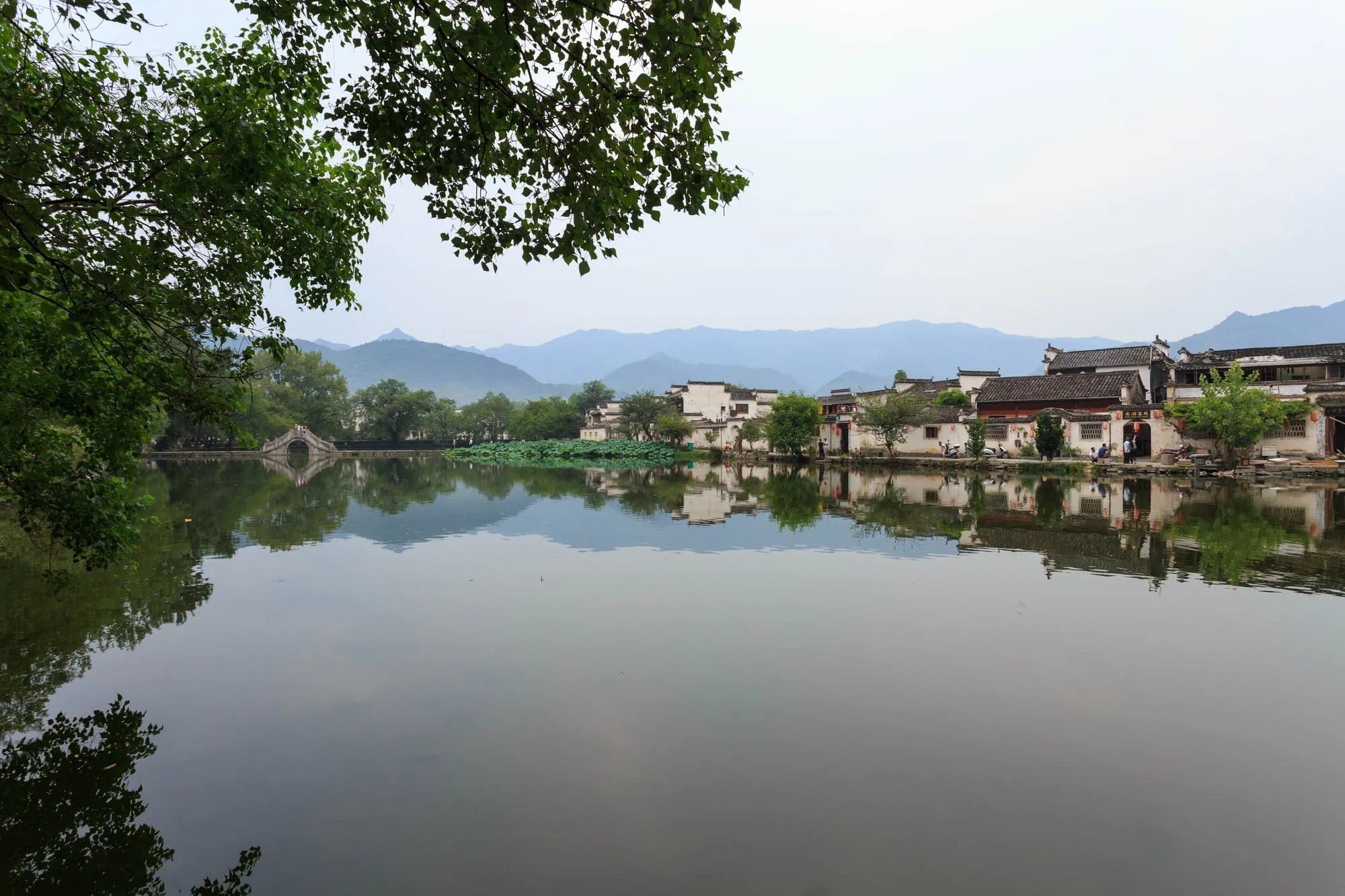
A gateway at Hongcun, September 2016. Zhangzhugang · Wikimedia Commons · CC BY-SA 4.0. Resized and compressed.
Keep the village visits distinct
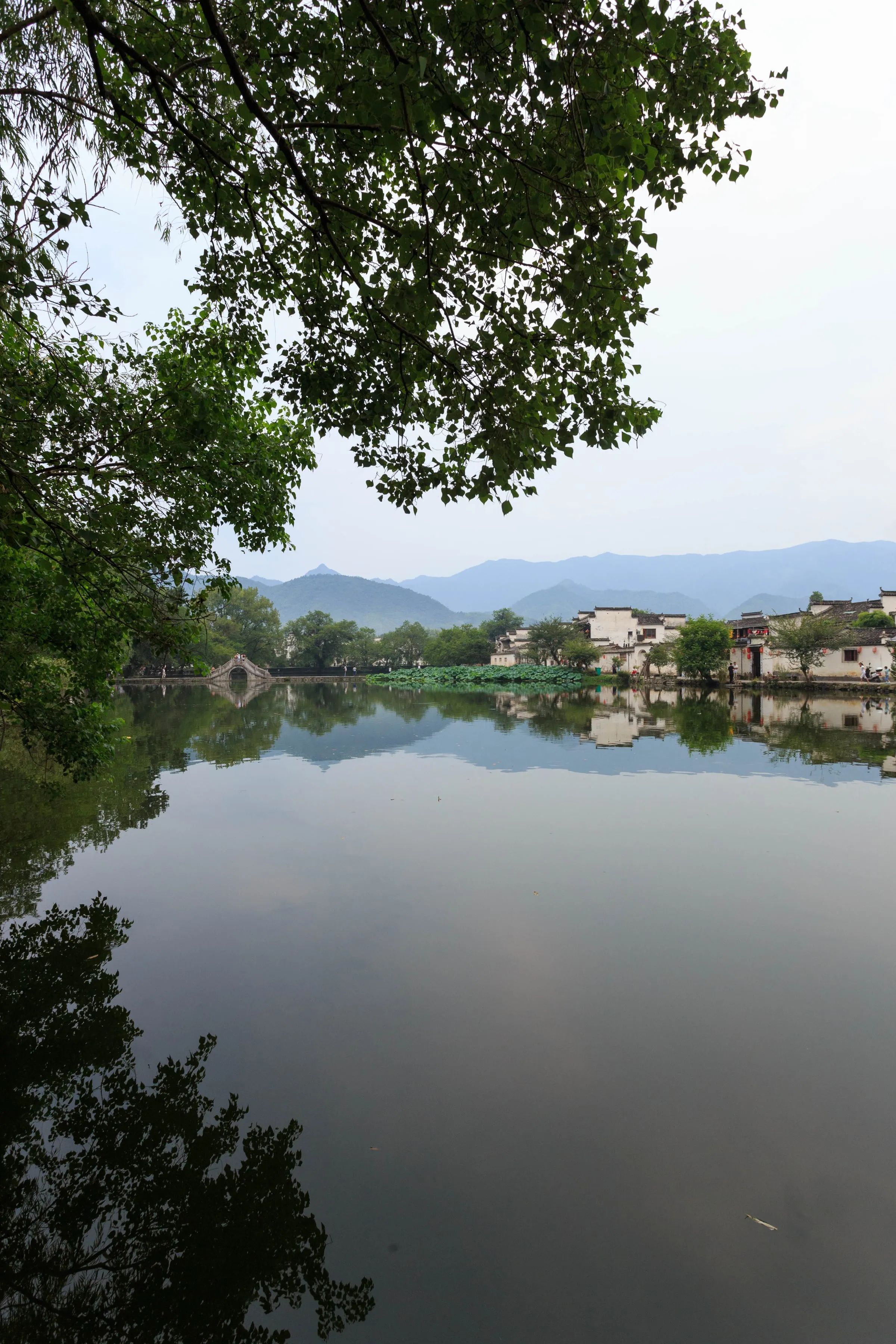
UNESCO identifies Xidi and Hongcun through their streets, buildings and water systems. Give each village you choose a different question: how the streets meet the houses, how water is arranged, or how a view changes between an open space and a narrow lane.
You need not visit both on the same day. One unhurried visit, a meal and a short drive can make a more satisfying day than several admissions. Check current tickets and vehicle access for the actual site.
Choose the right transport arrangement
Confirm mainland driving eligibility and rental terms before self-driving. If using a driver, agree the day’s route, waiting time, parking costs and the return arrangement in writing. A vague promise to “visit the villages” is not enough to compare quotes.
Keep a spare half-day or an easily dropped stop for rain, fatigue or a changed opening notice. The route should have a version that still works when you do less.
A good southern Anhui road trip is measured in the time you spend outside the car. Plan the driving to protect that time.
Planning sources
Xidi and Hongcun, UNESCO · Official provisional driving-permit guidance, checked 1 November 2026. This is a route-building guide; no unverified mountain-road number, driving time or all-weather access is claimed.
Additional route context: Huangshan municipal transport guide, checked 1 November 2026. Suggested night allocations are editorial estimates; published fares and transfer times are not reused.
Image credits
- Cover: Zhangzhugang · Wikimedia Commons · CC BY-SA 4.0. Resized and compressed.
CC BY-SA image adaptations retain the linked licence.