A tulou is not simply a round hotel. Fujian’s earthen buildings were made for communal living, and the UNESCO-listed examples include both circular and square forms. The interesting question for an overnight visit is how a modern room fits within that shared structure.
Start by distinguishing three offers: a room inside an earthen building, a converted property using part of one, and a nearby hotel with a view of a tulou. All can be valid choices, but they are different experiences and should not be sold to you as the same thing.
Identify the building, then the room
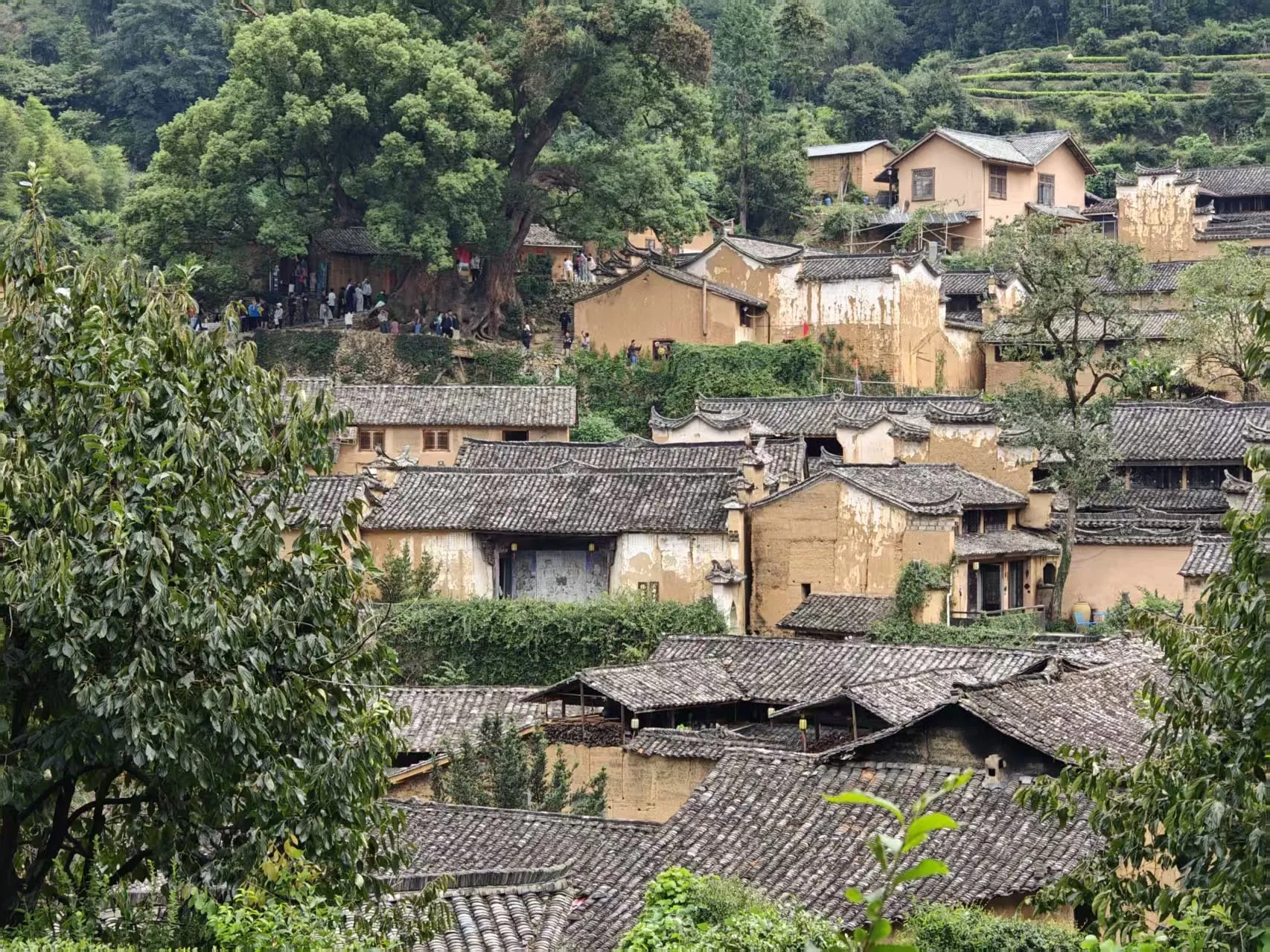
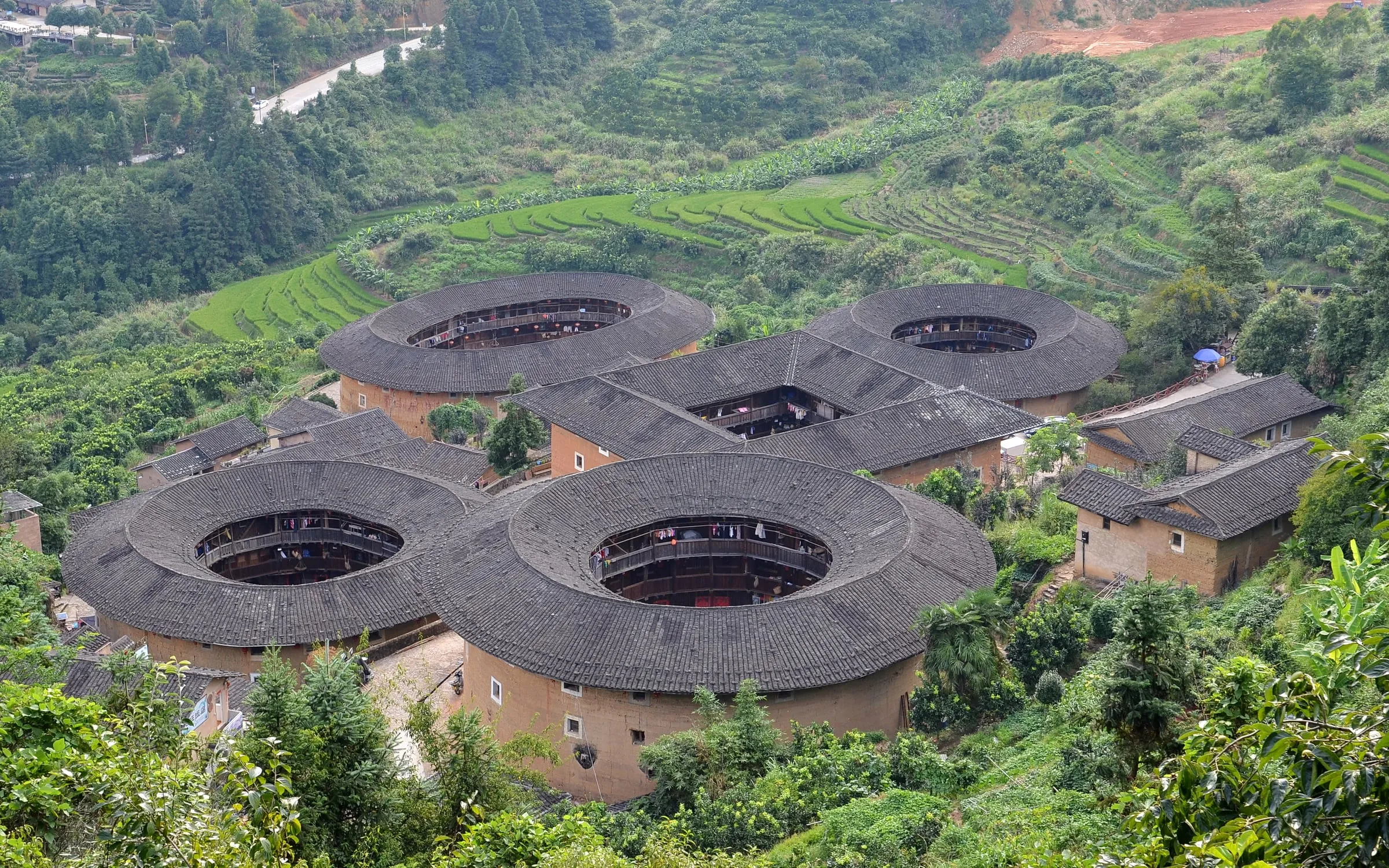
Ask for the building’s name, the precise entrance and the room category. A photograph of the Tianluokeng cluster (田螺坑土楼群), for example, establishes a landscape, not the location of a bed available to book. Do not infer that every visible building operates as visitor accommodation.
Request current room photographs and a written description of bathroom facilities. Ask whether the route to the room involves stairs, whether there is a lift, and how luggage is handled. Confirm heating or cooling and the practical arrangements for arriving after dark.
Understand what is shared
Corridors, courtyards and entrances may be used by residents as well as guests. Ask which areas visitors can enter and whether any part of the building has separate admission or restricted hours. A room booking does not grant access to neighbours’ homes.
Sound and privacy deserve particular attention. Ask how the room is separated from shared circulation and what activity to expect in the morning. Avoid assuming that a thick external wall means every internal room is quiet.
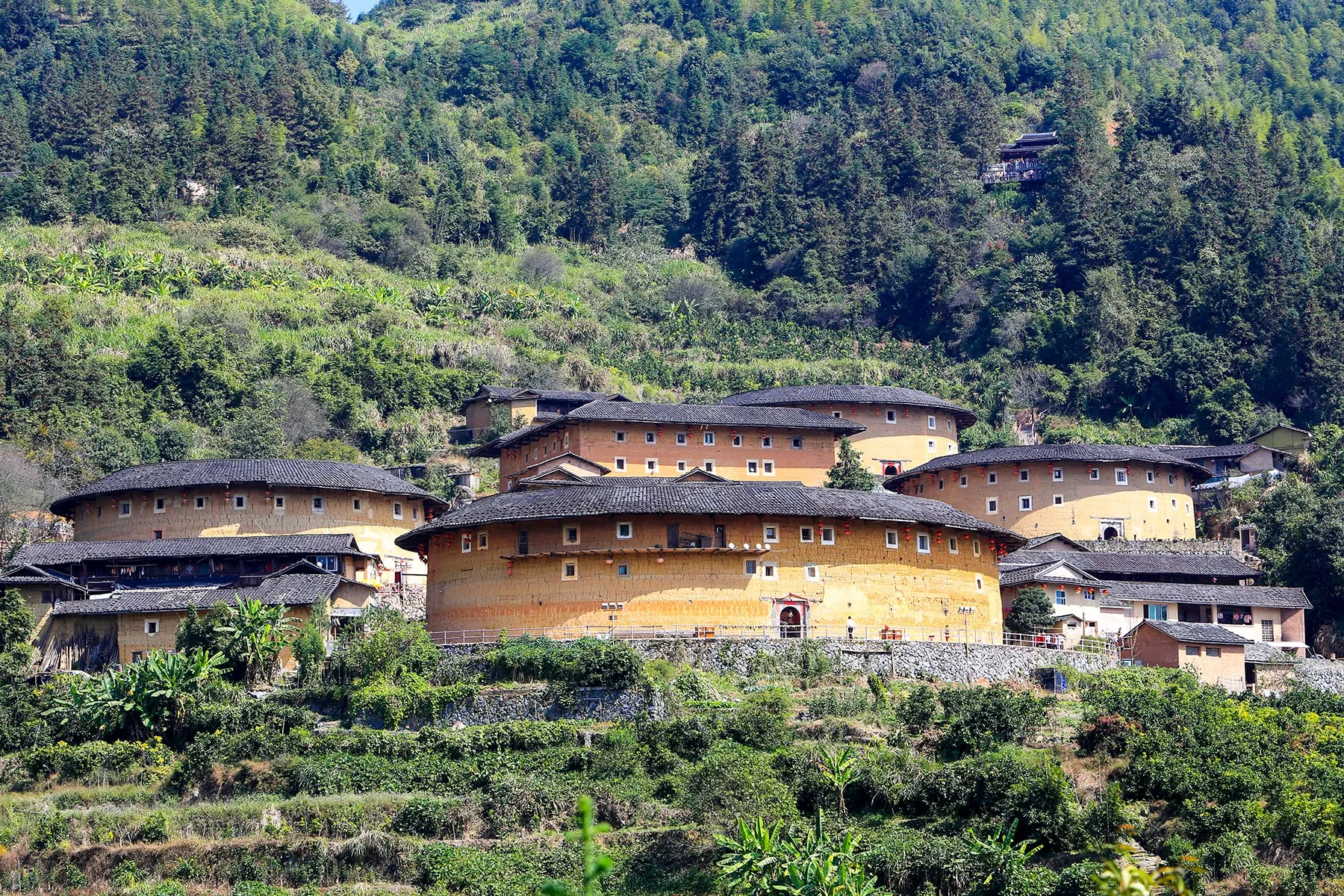
The cluster viewed from the side, November 2012. Windmemories · Wikimedia Commons · CC BY-SA 4.0. Resized and compressed.
Spend time with the building
Once you know the permitted areas, look at the relationship between the outer wall, the courtyard and the routes between floors. Read the site’s interpretation for the particular building rather than applying a general story to every tulou.
Ask before photographing residents or looking into an occupied room. Do not arrange people or household objects to improve a picture. A respectful visit can include uncertainty: it is fine to leave without knowing the purpose of every doorway.
Plan the journey back out
Confirm the nearest vehicle meeting point and the onward transfer before arrival. If you are visiting several clusters, check the distance between them rather than assuming that a shared heritage label means they are neighbours.
Choose an overnight stay because the room and access arrangements suit you and you want more time in that setting. If they do not, a nearby conventional hotel and a carefully planned daytime visit can be the better arrangement.
Planning source
Fujian Tulou, UNESCO, checked 1 November 2026 for building types and heritage context. Accommodation operation, room standards and access require confirmation with an individual property.
Image credits
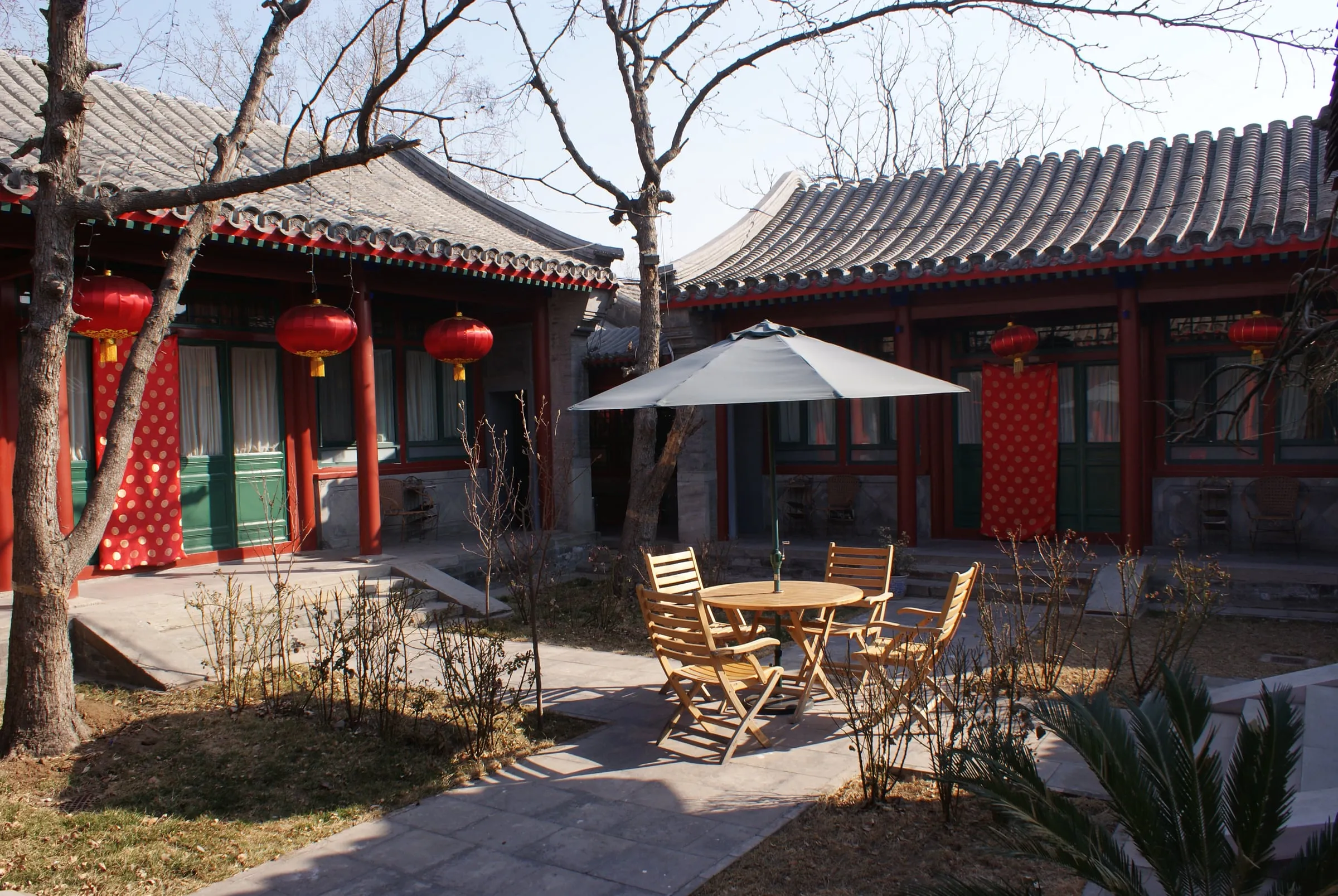
- Cover: 颐园新居 · Wikimedia Commons · CC BY-SA 4.0. Resized and compressed.
CC BY-SA image adaptations retain the linked licence.