The name Huihang Ancient Trail (徽杭古道) can suggest a line connecting two large places. For a visitor, the useful unit is a particular open walking section with a confirmed start and finish. Begin there, rather than imagining that the historic name supplies a modern end-to-end itinerary.
The route is associated with travel between the Huizhou region and Hangzhou. Today, a walk on a managed section can be a way to notice how paths cross a landscape: where they follow a slope, where steps concentrate the effort and where a stopping place makes sense.
Choose the section before the transport
Obtain the current visitor map and ask which entrance and exit your intended walk uses. Decide whether you are returning the same way or arranging a pickup at the other end. Two points that look close across a mountain may require a much longer road transfer.
Confirm the terrain, elevation change and current condition with the operator. Use a route estimate suited to your party and leave a margin for rests, photographs and slower ground.
Look at the path as well as the view
A trail can be interesting at a small scale. Notice the width available for passing, the way stone steps turn around a corner and the relationship between a rest point and the slope. Use on-site interpretation for historic claims rather than assuming every visible surface is original.
Keep movement easy for others. Stop off the main line where permitted, and do not occupy a narrow stair to arrange a photograph. If the group separates, agree the next stopping point before anyone walks ahead.
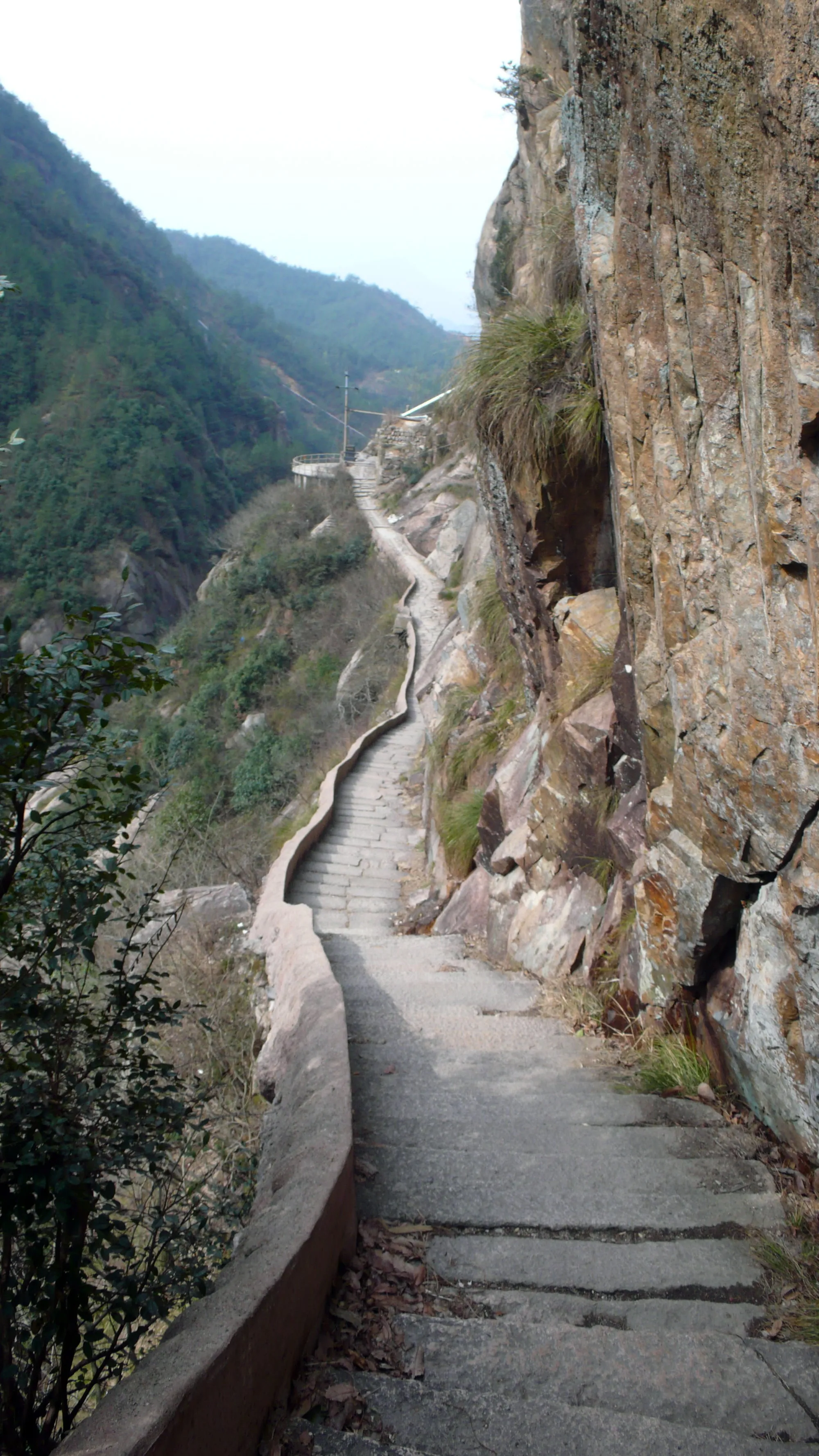
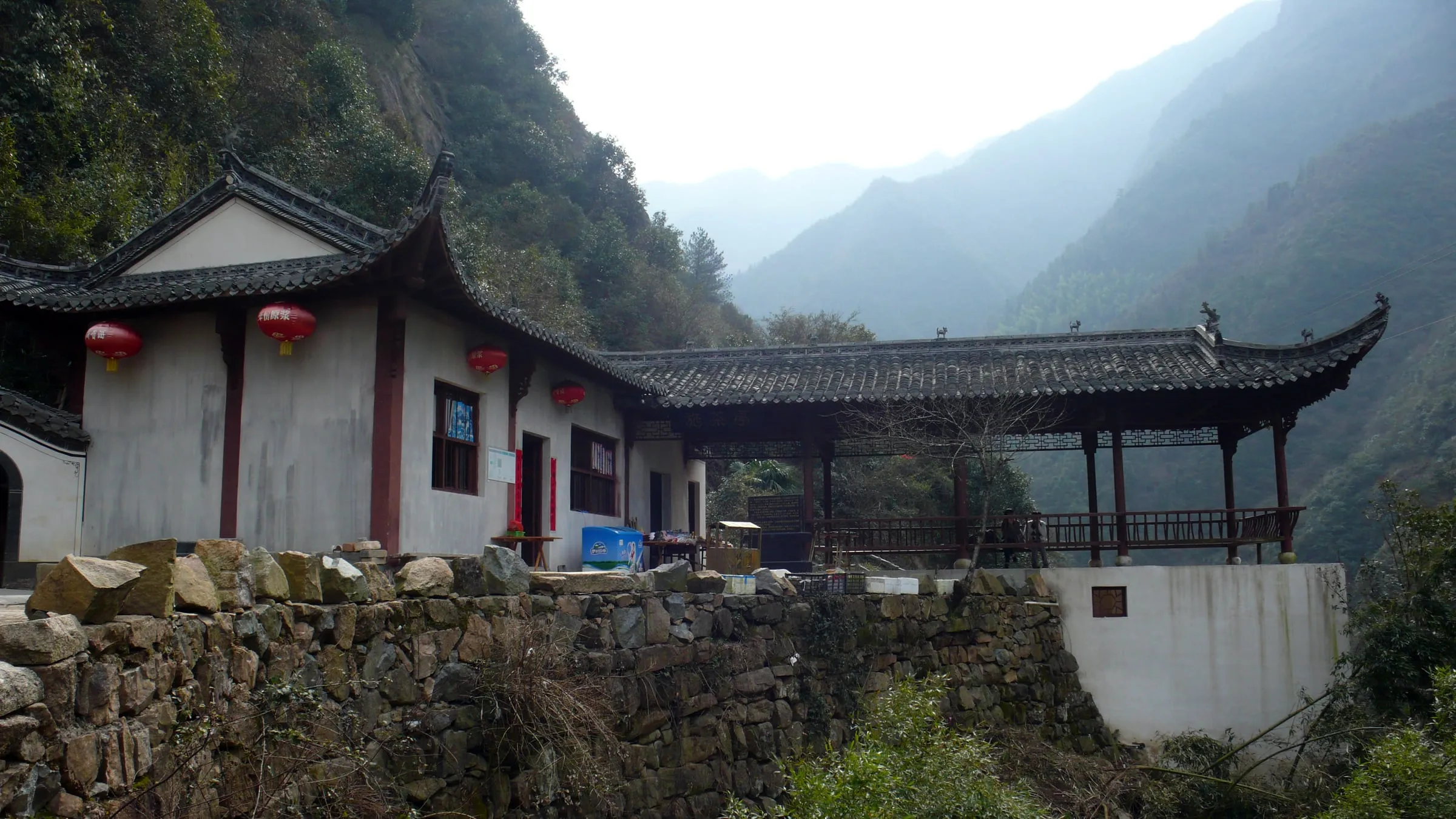
A section of the trail, photographed in February 2016; current access requires a separate check. 三猎 · Wikimedia Commons · CC BY-SA 4.0. Resized and compressed.
Plan a wet-weather alternative
Check the forecast and current notices before departure. Rain can change footing and make a route less comfortable or lead to closure. Follow the operator’s advice; a historic trade route is not an obligation to continue in poor conditions.
Carry what the confirmed section requires and do not assume refreshments or accommodation at every point shown in an old guide. If a place is essential to your plan, contact it directly before setting off.
Finish with time to leave
An enjoyable walk can become stressful if the final transfer is uncertain. Arrange the meeting point, contact details and last practical departure in advance. If relying on a driver, make sure both parties mean the same entrance in Chinese.
Choose the shorter confirmed section if that leaves time to notice the trail. The purpose is to spend a day walking through the landscape, not to force a historic route into a modern endurance target.
Planning source
Hangzhou’s introduction to the historic route, checked 1 November 2026 for cultural context. Current trail access, distance and transfers remain section-specific and must be confirmed before walking.
Image credits
- Cover: 三猎 · Wikimedia Commons · CC BY-SA 4.0. Resized and compressed.
CC BY-SA image adaptations retain the linked licence.