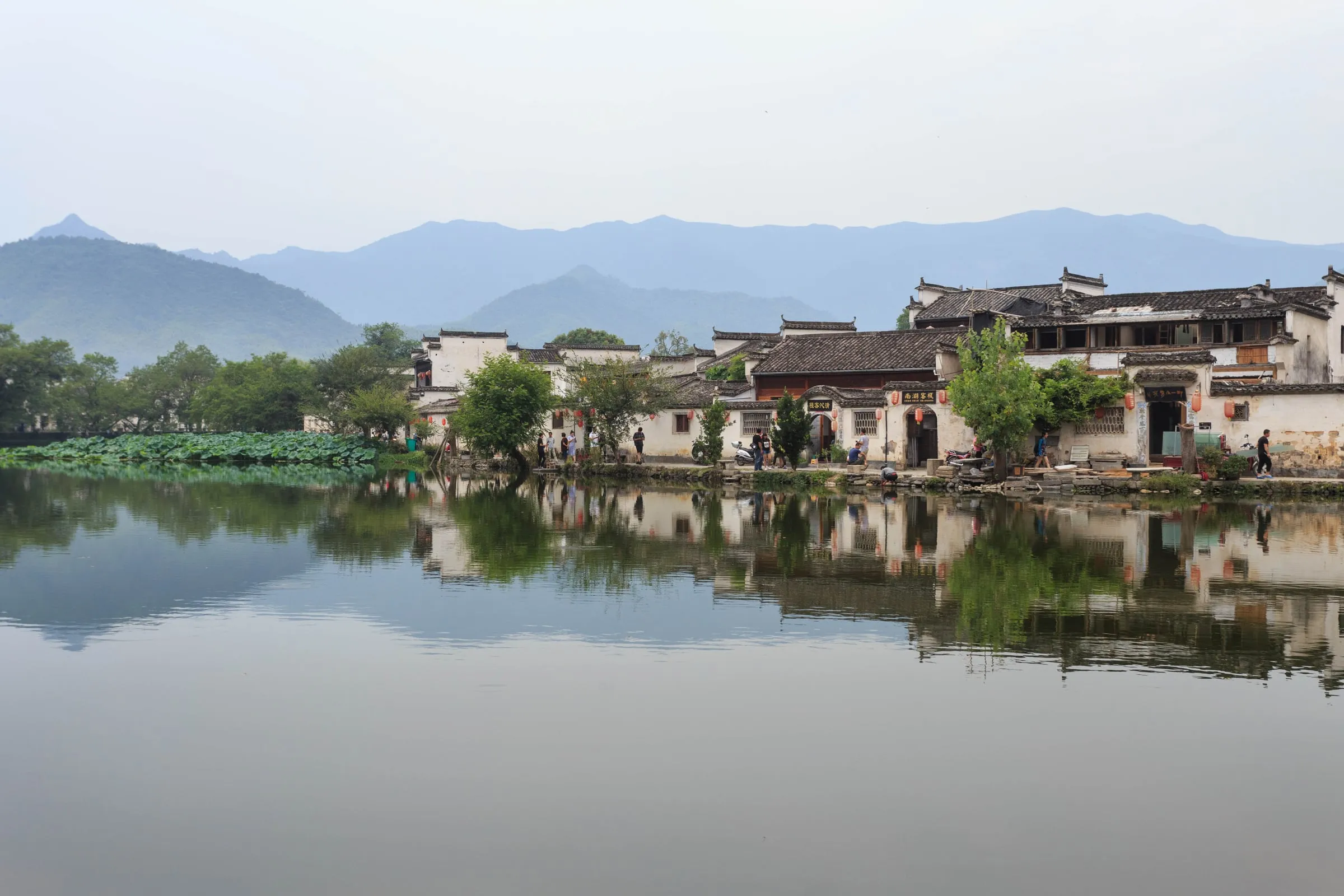
A white wall is often the first thing a visitor photographs in southern Anhui. Look a little longer and it becomes less uniform: a change in height, a dark tile edge, a narrow opening, a stain where water has travelled. The wall belongs to a building, and the building belongs to a street.
Xidi (西递) and Hongcun (宏村), both in Yixian, offer a useful starting point for reading this architecture. UNESCO treats the villages’ streets, houses and water systems as related parts of their historic setting. This article concerns these Anhui villages, not similarly named places elsewhere in China.
Begin with the outline
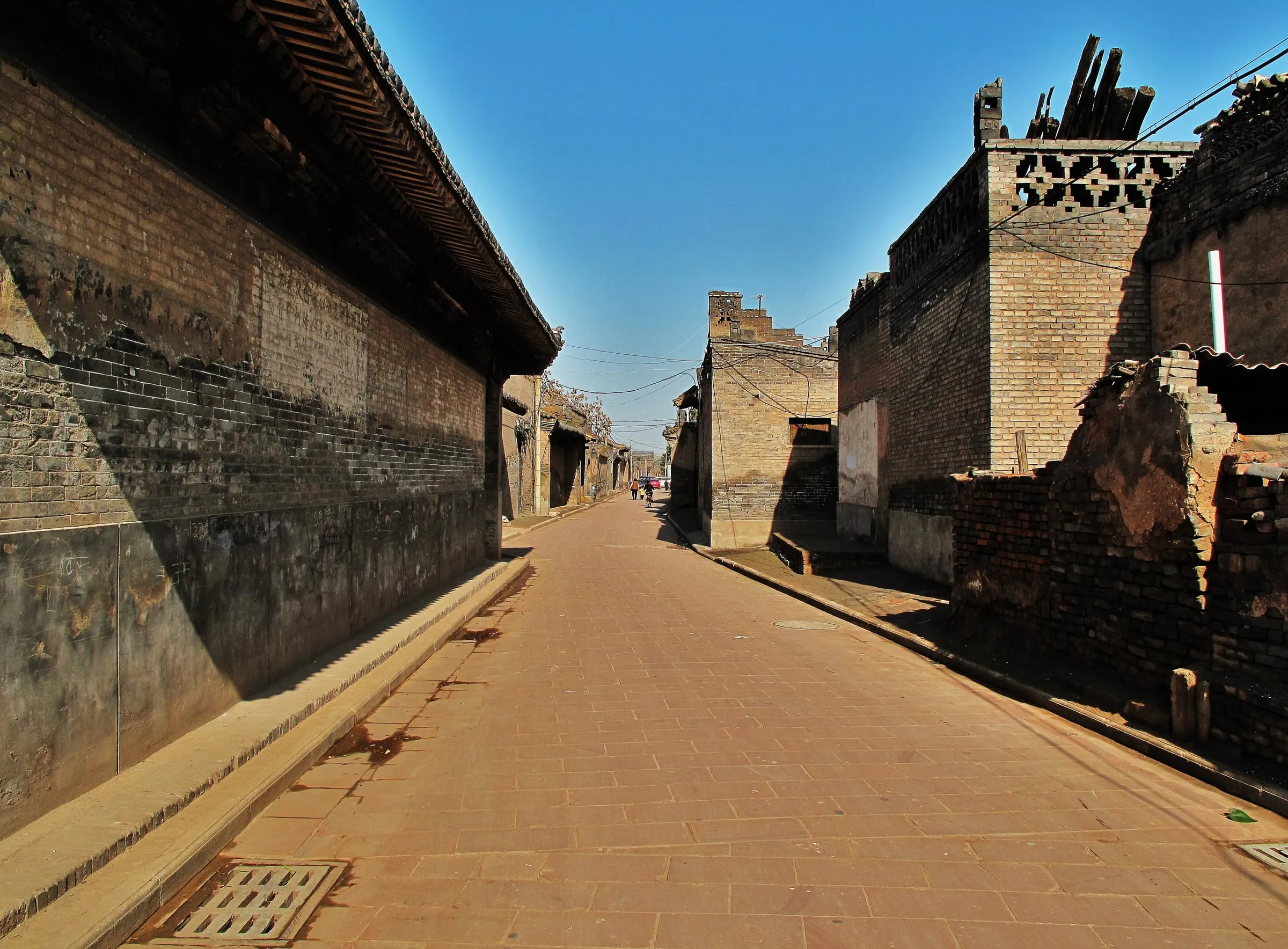
Stand where you can see several roofs together. Notice how gables rise between adjoining buildings and how dark tiles make the edges legible. Then compare that distant outline with a view from inside a lane, where the wall can fill almost the entire field of vision.
The stepped outline is often called a horse-head wall (马头墙). Huangshan’s municipal account of traditional homes identifies these high enclosing walls as fire walls. Their practical role is part of what gives the roofscape its distinctive rhythm; the shape is more than decoration.
The same account describes small internal courtyards, or tianjing (天井), bringing light and ventilation into deep houses and collecting rainwater into drainage. If a house is open to visitors, compare its enclosed street face with the light admitted inside. Use the particular building’s interpretation for its age and alterations; a general architectural pattern is not proof that every visible part is original.
Follow the water carefully
Hongcun’s water setting is part of its appeal, but it should not become only a reflection photograph. Look at the relationship between a public path, a channel and the entrances around it. Stay on permitted routes and avoid blocking narrow passages while waiting for a clear frame.
The villages are not empty architectural models. People live and work among the buildings. An open door can be a household entrance rather than an invitation, and a courtyard may require separate permission or admission.
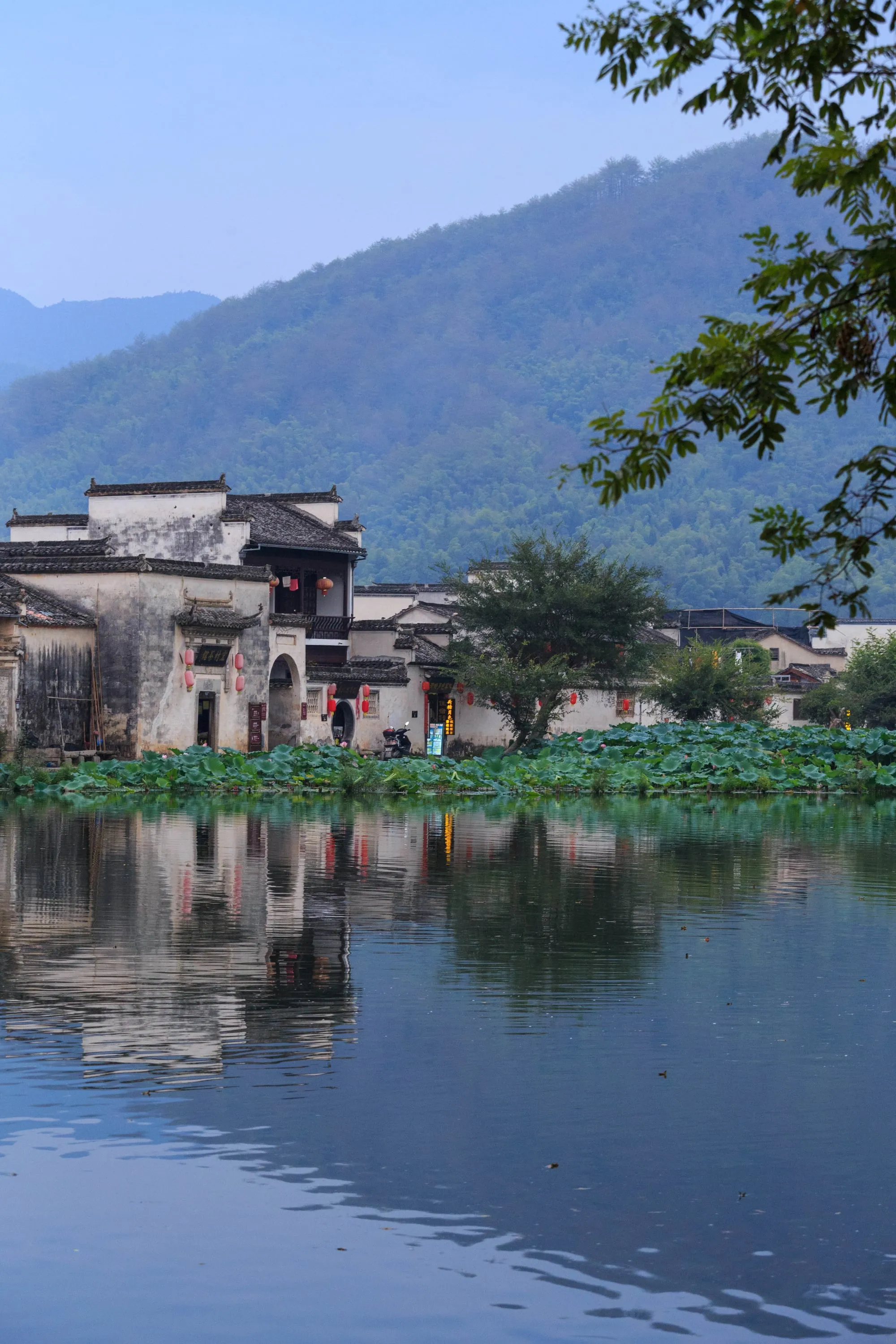
Hongcun’s waterfront houses, September 2016. Zhangzhugang · Wikimedia Commons · CC BY-SA 4.0. Resized and compressed.
Read a detail in context
Choose one doorway or carved feature and look at where it sits in the building. Is it at the street edge, under shelter or beyond a threshold? Read any available explanation before deciding what a motif represents. If the meaning remains uncertain, describe its form instead of inventing a symbolic story.
A visit can be rewarding without assigning a name to every detail. Compare proportions, materials and changes in light. Those observations are available even when a guidebook has little to say about a particular lane.
Choose one village for a first visit
Seeing both villages in a hurried day can make their differences harder to remember. Begin with the one that fits your transport and interests, then add the second only if the schedule leaves room to walk rather than transfer continuously.
Check current admission, vehicle access and the last return connection before setting out. Rain can change both the atmosphere and the footing. The aim is to spend time reading the place, not to collect two entrance photographs before the car leaves.
Planning source
Ancient Villages in Southern Anhui—Xidi and Hongcun, UNESCO, checked 1 November 2026 for location and heritage context. Current admission and access must be checked with the individual site.
Additional architectural source: Huangshan municipal introduction to Huizhou homes, checked 1 November 2026.
Image credits
- Cover: Zhangzhugang · Wikimedia Commons · CC BY-SA 4.0. Resized and compressed.
CC BY-SA image adaptations retain the linked licence.