A cup is a small object with a surprisingly long list of questions attached. How does the rim feel? Who shaped it, and who painted it? Is it intended for daily tea or for display? In Jingdezhen, those questions can turn shopping into a way of looking at the city.
Make room for that looking before you buy. A market visit need not end with a suitcase of ceramics, and a workshop visit need not produce a finished object. The interesting part is learning to recognise a decision: the weight of a handle, the curve of a foot ring, the difference between a repeated pattern and a design chosen for one particular shape.
This is a research-based guide to planning a ceramics-focused visit, not a report of purchases, interviews or a personally tested workshop.
Begin with the factory, before the stalls
Taoxichuan (陶溪川) gives the visit an architectural starting point. Its former ceramic factory setting remains visible in brick walls and chimneys. Before browsing, take a short circuit of the public spaces and notice the scale of the buildings: these were places for production, not simply a backdrop designed for a weekend market.
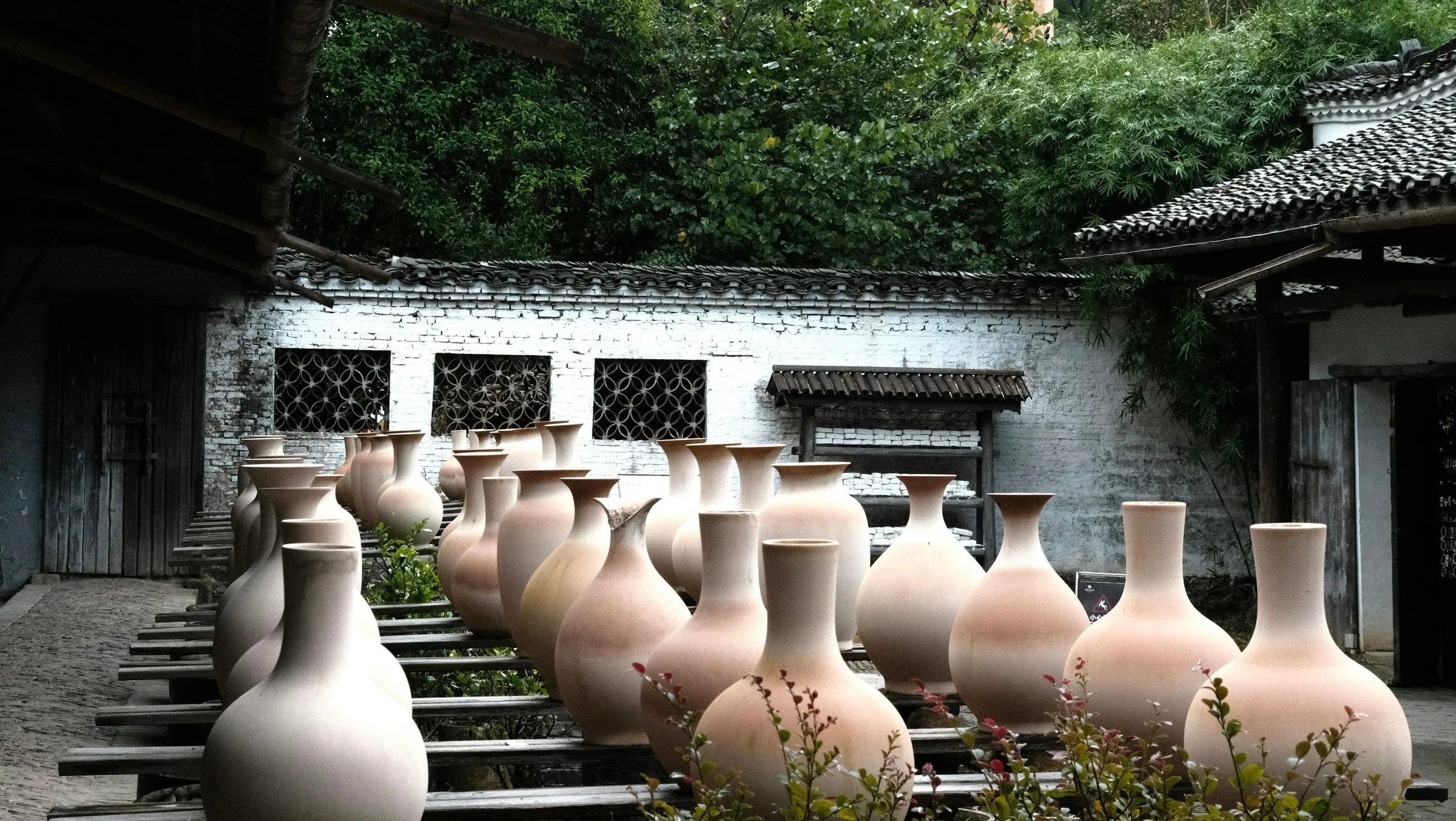
The cover photograph shows rows of vases in Jingdezhen; the photographer does not identify the courtyard as Taoxichuan. The photograph below shows Taoxichuan’s former factory setting, not a current market session. This matters when planning a visit: being able to enter a district does not mean every stall, gallery or studio is operating.
Jingdezhen’s municipal visitor information distinguishes Taoxichuan’s creative market from its designer market, rather than presenting one interchangeable event. Its May 2026 holiday programme listed separate locations and sessions. Those dates are past; use the distinction to ask better questions, then confirm the programme for your own day. Do not turn a holiday timetable into a year-round promise.
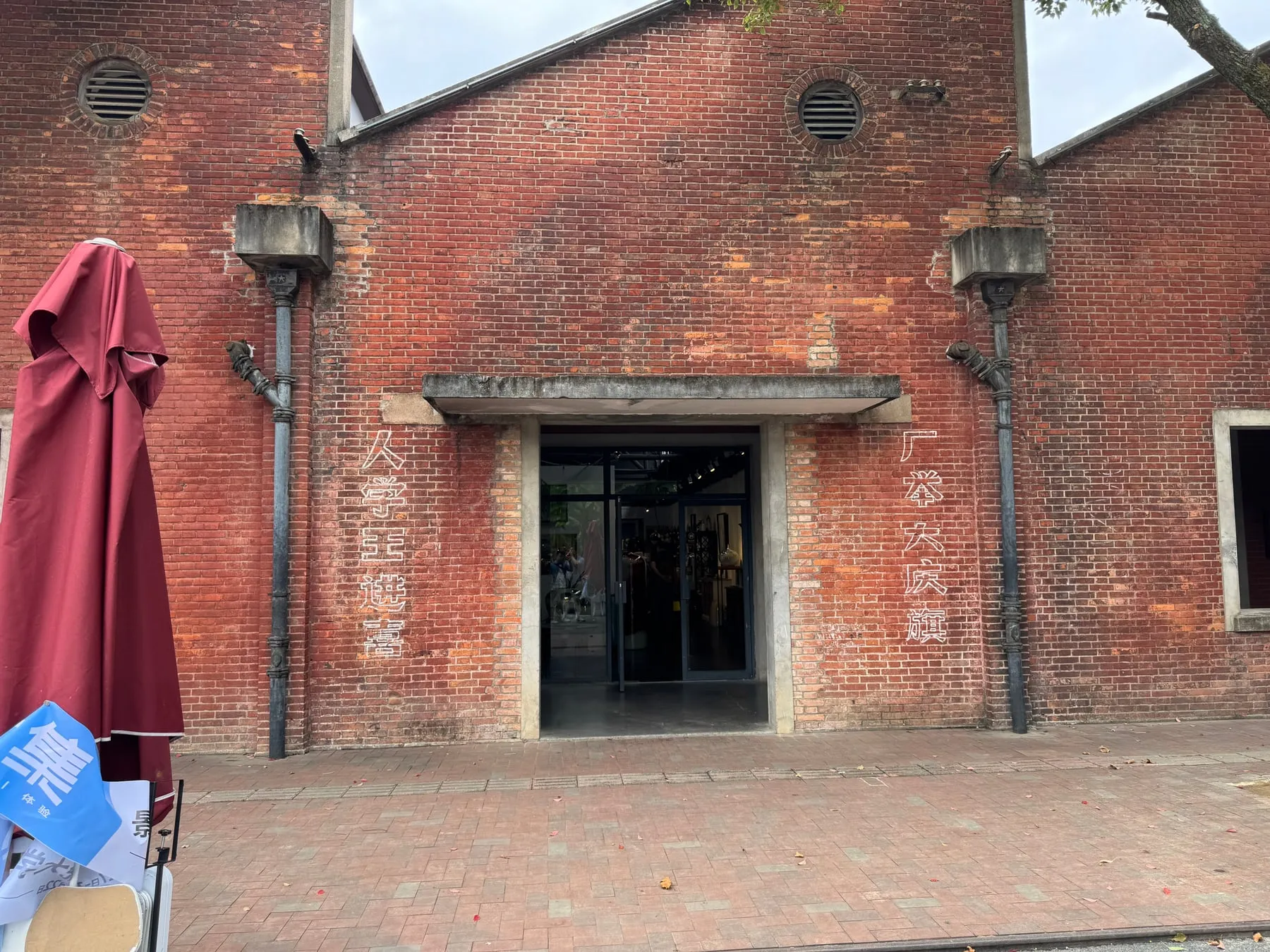
Taoxichuan’s former factory, 2024. Simon Wade · Wikimedia Commons · CC BY-SA 4.0. Resized and compressed.
Browse once without choosing
Give yourself a first circuit with no obligation to buy. Look at a small number of objects closely rather than treating every table as another shop to finish. If photographs are permitted, take one of the stall name as well as the piece; remembering “the blue bowl near the entrance” is rarely enough to find it again.
Choose an ordinary form to compare. A tea cup is useful because you can ask the same questions at several stalls. With permission, hold it by the body and then by its handle, if it has one. Look at the rim and base. Ask what the maker intended the piece to do.
Visible variation can be interesting without proving a particular production method. A signature is a starting point for a conversation, not an authentication service. Likewise, a polished presentation does not tell you whether the person selling the work made it. Ask directly and allow for a straightforward answer: designer, painter, studio representative and retailer are different roles.
Ask about the work behind the object
Useful questions are concrete. Was this shape made individually or with a mould? Was the decoration painted by hand, printed or applied another way? Which parts were made in this studio, and which involved someone else? None of these answers needs to be a verdict. They help explain the object and its price.
For a cup or bowl you plan to use, ask whether it is intended for food contact and what care instructions the producer supplies. Do not infer microwave, dishwasher or food-use suitability from appearance. If the seller cannot clarify, choose another piece for daily use rather than treating an attractive glaze as a guarantee.
Keep the conversation proportionate to the purchase. You can be curious without demanding a demonstration from someone who is serving other customers. Ask before filming a making process or photographing a person’s face. A market stall is a place of work as well as a place to browse.
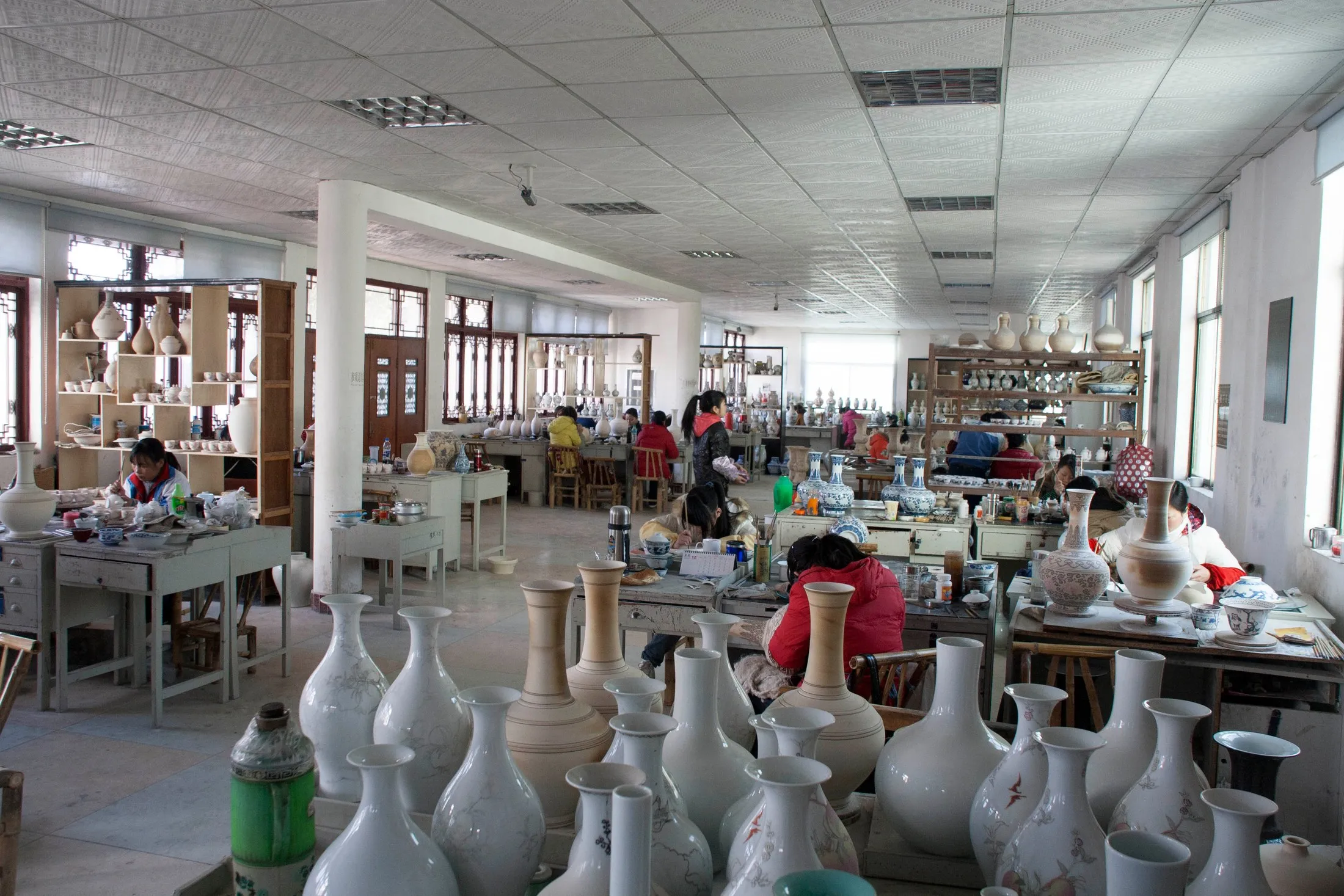
Ceramic painters in Jingdezhen, 2008. generalec · Flickr · CC0.
The photograph brings the workbench into view: vessels at different stages sit beside brushes and painted pieces. It is a reminder to ask about the work behind an object, rather than assuming that every task belongs to the person at the sales table.
Give a workshop its own time
If you want to understand a process, arrange a workshop separately from the market circuit. Confirm what the session actually includes: watching a demonstration, shaping clay, decorating an already prepared form, or another activity. A photograph of a potter at a wheel does not tell you what a beginner will be offered.
Ask the organiser how long the session lasts, which language they can teach in, what happens after your part is finished, and whether firing, packing and delivery cost extra. Confirm the collection or shipping date before paying. If you leave Jingdezhen the next morning, a promise that you can “make your own cup” needs a clear explanation of how that cup will eventually reach you.
No particular workshop is recommended here as personally tested. If no suitable session can be confirmed, keep the day focused on the public district and the market rather than arriving at a working studio expecting unannounced access.
Buy for the journey home
Set a comfortable budget before the second circuit. Then think about the object outside the stall: where will it live, how will you use it, and can you carry it safely? One cup you want to reach for is a more convincing reason to buy than an apparently dramatic discount.
Agree on the total price and what is included. For a fragile purchase, ask the seller to show you the packing before the transaction is finished. Check the item together, keep a receipt and save the seller’s contact details. If shipping is offered, confirm the destination, delivery charge, damage procedure and any import requirements that apply to your destination. Do not assume a stall can ship internationally because it can arrange domestic delivery.
This guide concerns contemporary ceramics. A claim that an object is antique introduces different questions about provenance and export; it is not a bargain to assess casually on the strength of a market conversation.
A manageable shape for the visit
Give Taoxichuan a daylight block for its public spaces and a separately confirmed market session for browsing. Put a booked workshop on another morning or afternoon rather than fitting it into the gap between stalls. Leave time to eat, pack purchases and travel back without carrying fragile bags through a rushed schedule.
Save the Chinese name 陶溪川 and the exact venue named in the event notice. Confirm whether your session is in the area you expect, rather than navigating only to a broad district pin. Event location, opening arrangements and workshop availability need checking for the actual date; this article supplies no fixed hours or speculative prices.
Leave with something you can explain, whether it is a cup or simply a clearer idea of what you like. The visit becomes more memorable when the object has acquired a few good questions along the way.
Sources
Checked on 1 November 2026: Jingdezhen municipal May holiday visitor programme. Used to distinguish market types and past event locations, not to assert current opening hours. Public image descriptions identify the photographed former factory buildings at Taoxichuan. Shopping questions and the suggested pacing are editorial guidance; no individual seller, workshop or product has been independently tested for this article.
Image credits
- Cover: Joan W · Unsplash · Unsplash License.
- Taoxichuan factory: Simon Wade · Wikimedia Commons · CC BY-SA 4.0.
- Ceramic workshop: generalec · Flickr · CC0.
Photos resized and compressed. The CC BY-SA image retains its original licence.